
EV Charging in Australia: What It Really Costs (and How to Pay Less)
As electric vehicle (EV) adoption accelerates across Australia, one question comes up again and again:
How much does it actually cost to charge an EV?
The answer isn't as simple as you might think because it depends entirely on how and where you charge. From ultra-fast public chargers to solar-powered home setups, the difference in running costs can be substantial. While EVs are generally cheaper to run than petrol or diesel vehicles, understanding the various charging methods can help you make informed decisions about convenience, cost and lifestyle.
Most Australian EV drivers don't rely on a single charging method. Instead, they use a combination of options depending on where they're traveling, how often they drive and what charging infrastructure is available to them.
Power Your EV For Less With Solargain Get A Free EV Charging Assessment With Solargain |
|
The Five Ways Australians Are Charging Their EVs
1. Fast Charging (Quick, but Expensive)
Fast charging is often the first thing people think of when they imagine owning an electric vehicle. These high-powered public charging stations are designed to deliver large amounts of energy in a short period of time, allowing many EVs to charge from around 20% to 80% in as little as 20 to 40 minutes.
This is the most convenient charging option when traveling long distances and is a key reason why electric vehicles are becoming increasingly practical for interstate and regional travel. Australia's public charging network continues to expand, with fast chargers now located along major highways, in shopping centre car parks and across regional centres.
However, convenience comes at a price. Fast charging is typically the most expensive way to charge an EV and is best viewed as a travel solution rather than an everyday charging strategy.
Planning ahead can make the experience much smoother. Apps such as PlugShare help drivers locate chargers, check availability and plan charging stops before leaving home. It is always worth mapping your journey in advance, particularly in regional areas where charging infrastructure may be less frequent.
Payment methods vary between charging networks. Some allow direct payment through an app, while others offer membership cards or key fobs. Major networks such as Chargefox and Tesla make it relatively simple to access chargers across Australia.
For most EV owners, fast charging provides peace of mind and flexibility, but it is rarely the cheapest way to power a vehicle over the long term.
2. Destination Charging (Lifestyle Charging)
Destination charging is one of the most underrated aspects of EV ownership.
Instead of making a dedicated stop to charge your vehicle, destination charging allows you to add range while doing something else. These chargers are commonly found at cafes, restaurants, wineries, shopping centres, hotels and tourist attractions.
The concept is simple. You arrive at your destination, plug in your vehicle and go about your day. Rather than sitting in your car waiting for it to charge, the charging takes place while you are enjoying a meal, shopping, attending a meeting or spending time with family and friends.
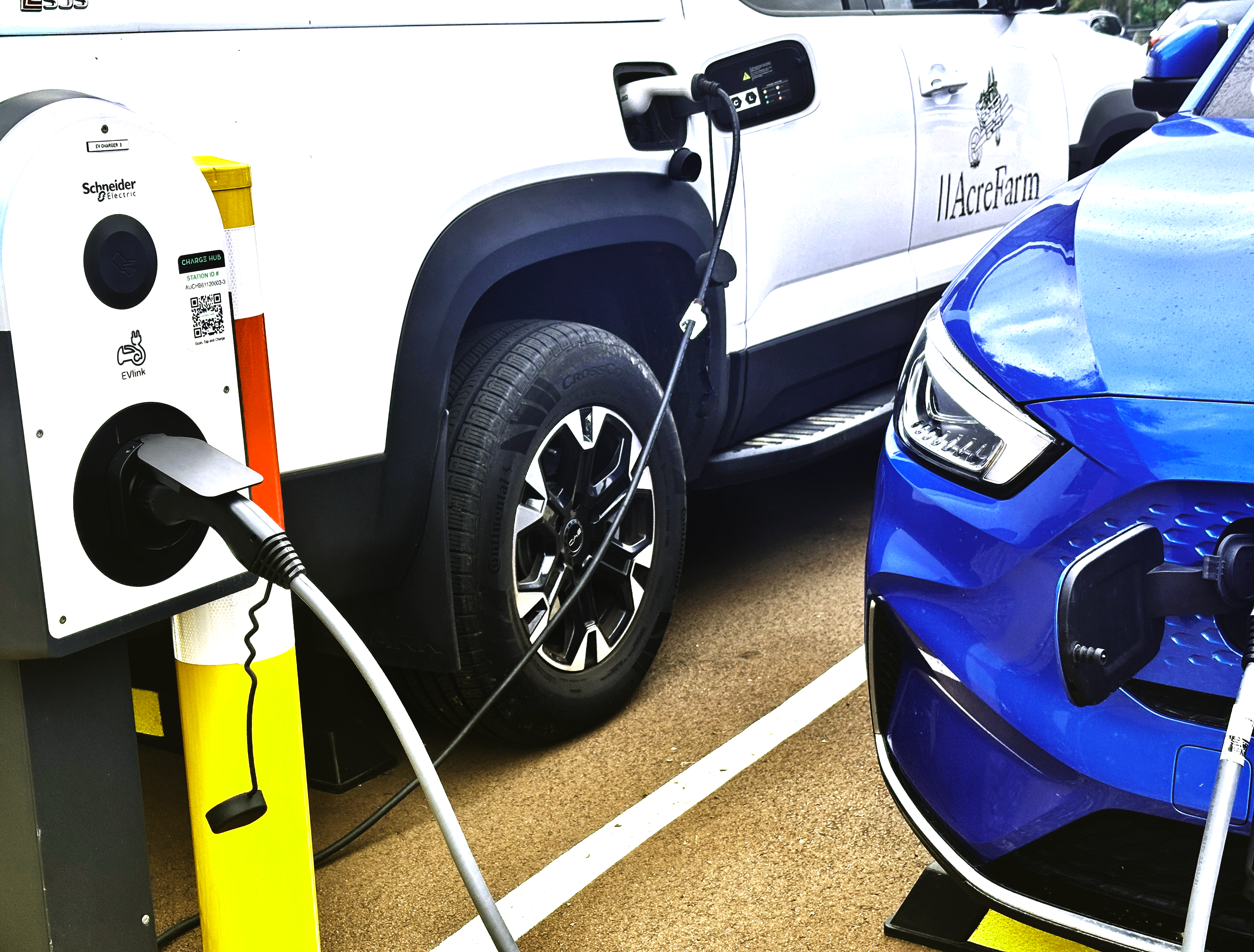
A great example of this is 11 Acre Farm in Forrestdale, WA that offers EV Charging. Visitors can charge their EV while enjoying a coffee, sharing a meal at The Good Paddock restaurant, exploring the property or letting the kids interact with the farm animals. Charging becomes part of the overall experience rather than a separate activity.
Destination chargers are often untethered, meaning you'll need to bring your own Type 2 charging cable. For experienced EV drivers, keeping a Type 2 cable in the boot quickly becomes second nature.
Some destination chargers operate through charging networks such as Chargefox and require an app for activation. Others are plug-and-play, allowing drivers to simply connect and charge without any additional setup.
While destination charging is generally slower than fast charging, it offers a convenient and often enjoyable way to keep your battery topped up while you're already spending time somewhere.
3. Home Charging (The Everyday Default)
Most EV owners quickly realise that home becomes their new fuel station.
Rather than making a weekly trip to a service station, charging simply becomes part of the daily routine. For many Australians, this convenience is one of the biggest lifestyle benefits of owning an electric vehicle.
Home charging can be achieved in a few different ways. The simplest option is trickle charging using a standard 10 Amp household power point. While slower than other options, it can be sufficient for drivers who only travel modest distances each day and have plenty of time to charge overnight.
Many households also choose to install a dedicated wall charger. These chargers provide faster charging speeds and can make charging more practical for larger EV batteries or households where the vehicle sees regular use.
The benefits of charging at home are straightforward:
- Charge overnight while you sleep
- No queues or waiting
- No detours to refuel
- Start each day with a charged vehicle
- Greater convenience and flexibility
For many drivers, home charging becomes the primary way they power their vehicle, with public charging only used when traveling longer distances.
4. Solar Charging (The Cost Game-Changer)
If you already have solar panels on your roof, charging an EV can become even more cost-effective.
Instead of relying entirely on electricity purchased from the grid, solar charging allows you to use energy generated by your own solar system. Every kilowatt-hour produced by your panels has the potential to power your home, your appliances and your transport.
For households that are able to charge during daylight hours, solar charging can significantly reduce the cost of EV ownership. Rather than exporting excess solar energy back to the grid, some homeowners choose to direct that energy into their vehicle instead.
The amount of solar energy available for charging will vary depending on factors such as weather conditions, solar system size and household energy consumption. Households with larger solar systems may be able to charge a substantial portion of their vehicle using excess solar generation during the day.
Smart energy management systems such as iStore can further optimise this process. Features like Solar Aware Charging allow homeowners to prioritise charging when excess solar energy is available, helping maximise self-consumption and reduce reliance on grid electricity.
Solar charging won't be the right solution for everyone, but for households with access to rooftop solar, it can be an effective way to lower EV charging costs.
5. Solar + Battery Charging (The Ultimate Setup)
This is where home energy management becomes particularly interesting.
One challenge many EV owners face is timing. Solar panels generate most of their electricity during the middle of the day, but many vehicles are away from home during this period. As a result, households often export solar energy to the grid during the day and charge their vehicle from the grid at night.
Battery storage offers an alternative.
Instead of exporting excess solar generation, a battery can store that energy for later use. When the vehicle returns home in the evening, that stored solar energy can be used to charge the EV.
In practice, this means energy captured during the day may be available for household use and vehicle charging after sunset. For some households, this can increase the amount of solar energy used on-site and reduce reliance on purchased electricity.
Whether battery storage makes sense depends on a range of factors including electricity tariffs, vehicle usage, charging habits and the size of the solar system. Some EV owners achieve excellent results charging directly from solar during the day, while others may benefit from storing solar energy for later use.
The key takeaway is that battery storage creates another charging option within a broader home energy system.
What Does It Actually Cost?
When comparing charging methods, a general pattern emerges.
Petrol and diesel vehicles typically have the highest ongoing fuel costs. Public fast charging is often the most expensive form of EV charging, although it still compares favourably with conventional fuel in many situations.
Destination charging sits somewhere in the middle, while home charging is often where drivers begin to see meaningful savings.
For households with solar, charging costs can be reduced further by making use of self-generated energy. Where battery storage is also incorporated, stored solar energy may be used for overnight charging, depending on household energy requirements and charging patterns.
The gap between petrol-powered driving and EV charging can be significant, particularly for households that drive regularly and have access to home charging.
Do You Need to Bring Your Own Cable?
For destination charging, the answer is often yes.
Most destination chargers are untethered and require drivers to use their own Type 2 to Type 2 charging cable. This is particularly common at cafes, hotels and lifestyle destinations.
Fast chargers are different. These units typically have built-in charging cables, so drivers simply connect the charger directly to their vehicle.
For convenience, many EV owners keep a Type 2 cable permanently stored in their boot so they are prepared whenever they encounter a destination charger.
How iStore Supports EV Charging
An energy ecosystem such as iStore doesn't just power your home. It can also help optimise how energy is used throughout the day.
Depending on the system configuration, solar energy may power household appliances first, charge a battery when excess generation is available, or be directed towards EV charging when conditions are favourable.
Features can include:
- Solar-aware charging
- Charging schedules
- Smart energy management
- Integration with solar and battery systems
This provides homeowners with greater visibility and control over how energy flows between the home, battery and vehicle.
How It All Works Together
As more households embrace solar, battery storage and electric vehicles, many are looking at their energy use as part of a connected system rather than a collection of separate technologies.
During the day, solar may power the home and generate excess energy. Depending on the setup, that excess energy can be exported to the grid, stored in a battery or used to charge an EV.
In the evening, stored energy can help power household loads. Overnight, vehicles may charge using grid electricity, stored battery energy or a combination of both.
Every household will have different priorities, but understanding how these technologies interact can help homeowners make more informed decisions about energy use and charging costs.
Why This Matters
EV ownership isn't simply about replacing petrol with electricity.
It's about understanding where your energy comes from, when you use it and how much control you have over your ongoing costs.
The best charging solution will look different for every driver. Some will rely heavily on fast charging, while others may charge almost exclusively at home. Some households may have solar panels, while others may choose to incorporate battery storage as part of their broader energy strategy.
Understanding the costs and benefits of each charging method allows you to choose the approach that best suits your lifestyle.
The Smart Charging Strategy
Most EV owners eventually develop a charging routine that combines multiple methods:
- Fast charging for long-distance travel
- Destination charging during lifestyle and regional stops
- Home charging for daily convenience
- Solar charging when excess generation is available
- Battery-assisted charging where storage forms part of the home energy system
Each charging method serves a different purpose, and together they create the flexibility that makes EV ownership practical for a wide range of Australian households.
Electric Cars Are Changing The Way We Think About Energy
EVs aren't just changing the way Australians drive. They're changing the way people think about energy.
Fast charging provides convenience for road trips. Destination charging adds flexibility when you're out and about. Home charging delivers everyday practicality. Solar can help reduce charging costs, while battery storage creates additional opportunities to use energy when it suits your household.
The real advantage isn't that there's one perfect way to charge an EV.
It's that Australian drivers now have more charging options than ever before, allowing them to choose the combination that best fits their lifestyle, travel habits and energy goals.
