
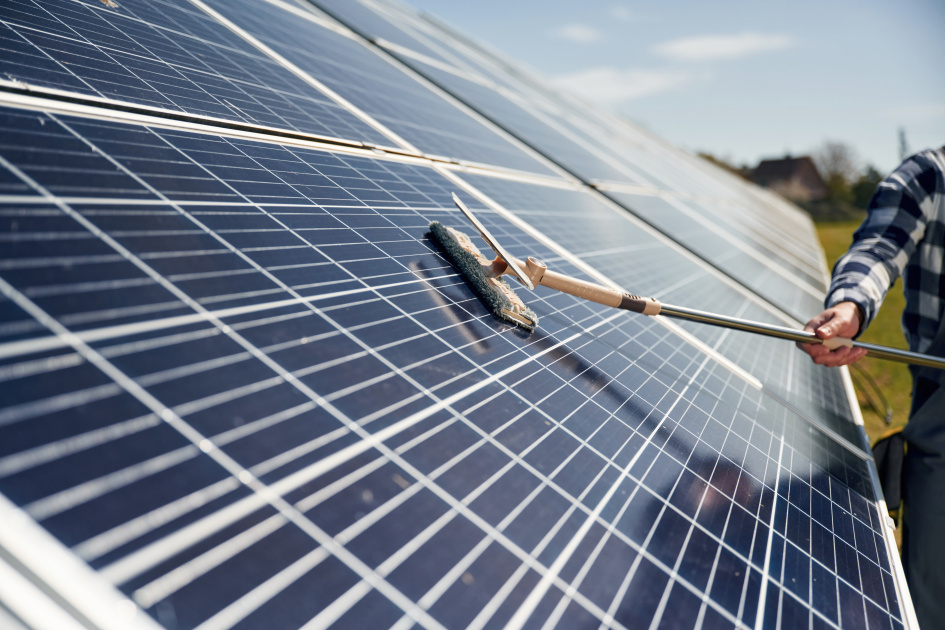
If you’ve invested in solar panels for your home, it’s only natural to want to protect that investment and keep your system performing at its best. One of the most common questions homeowners ask us is whether solar panels actually need cleaning or if rain is enough to do the job.
The short answer—well, it’s not so short. The answer is sometimes yes, sometimes no.
Like many aspects of solar performance, the real answer depends on your environment, your roof, and how your system is set up. Understanding when cleaning helps your system out (and when it doesn’t) can save you money, time, and unnecessary maintenance.
How Solar Panels Stay Clean Naturally
Solar panels are designed to be relatively low-maintenance. In most cases, rainfall will wash away loose dirt, dust, and debris before they have a chance to build up significantly.
This is especially true in areas that experience the following:
- Regular rainfall
- Moderate wind (which helps prevent buildup)
- Minimal pollution or construction dust
Because panels are typically installed at an angle, water naturally runs off the surface, taking light debris with it. For many homeowners, this natural cleaning process is enough to keep systems operating efficiently year-round.
However, “low maintenance” does not mean “no maintenance at all”. Like all things, your solar panels will still be affected by their environment, and cleaning will sometimes be necessary in certain situations.
When Solar Panel Cleaning Actually Makes a Difference
There are situations where relying on rain alone to keep your solar panels clean simply isn’t enough. Over time, certain types of buildup can accumulate on the surface of your panels and start to affect their performance.
Heavy Dust and Pollution
If you live near busy roads, construction zones, or industrial areas, heavy dust and pollution can frequently build up on your solar panels. Fine particles can accumulate faster than rain can wash them away, creating a thin film on your panels that, over time, can reduce the amount of sunlight reaching the cells.
Bird Droppings and Organic Debris
Bird droppings, leaves, pollen, and even algae can all cling to solar panels and block sunlight more aggressively than dust. Unlike general grime, these don’t always wash away easily and can create noticeable drops in output if left untreated for too long.
Low Rainfall or Dry Conditions
In drier regions or during extended periods without rain, debris can build up gradually. Without natural rinsing, even small amounts of dirt can compound over time.
Flat or Low-Angle Roofs
Panels installed at a lower pitch don’t shed water as effectively. This means dirt and debris are more likely to settle and stay put.
Following a Fire/ Bushfires
Ash and debris from fires are abrasive and can block sunlight, so remove them promptly using gentle brushes and plenty of fresh water to avoid scratching the glass. Wear a mask and gloves to avoid inhaling toxic particles, rinse thoroughly after brushing, and consider a professional clean if ash is thick or panels show a sustained drop in output.
Living Within 1km From The Coast
Living within 1 km of the coast exposes panels to salt spray, sand, and faster soiling that reduce light transmission and can corrode frames and electrical connections, cutting energy output. Regular cleaning prevents efficiency losses, avoids long-term damage (hot spots, glass etching, corrosion), and preserves system lifetime and ROI.
Tree Sap or Wasp Colonies are present
Tree sap is sticky and can harden into residue that blocks light and may require a mild, panel-safe solvent or soapy water and a soft cloth to remove without scratching. Wasp nests or colonies under panels can cause shading and wiring damage—remove nests safely (PPE or pest control) and seal entry points or install mesh to prevent re‑nesting.
Any combination of these factors, when left untreated over time, can impact overall solar panel performance.
How Much Difference Does Cleaning Make?
For the average household, the performance gains from cleaning are often modest. A lightly soiled system may only lose a small percentage of its efficiency, which many homeowners won’t even notice.
However, if panels become heavily covered in dirt or debris—particularly if parts of the panel are shaded—the impact can become far more noticeable.
Cleaning tends to make the biggest difference when there is visible buildup or when your system’s performance has dropped without another clear explanation. Homes in coastal or dusty areas may also benefit more from occasional cleaning than those in suburban environments with regular rainfall or exposure to intense storms.
Can You Clean Solar Panels Yourself?
While it is technically possible to clean your own solar panels, it’s not something most homeowners should take upon themselves. Working on a roof carries obvious safety risks, particularly on sloped or multi-storey homes.
There’s also the risk of damaging the panels if the wrong tools or cleaning methods are used. Abrasive materials can scratch the glass, and harsh chemicals may affect the protective coatings.
For these reasons, DIY cleaning is generally not recommended unless it can be done safely from the ground or with proper equipment and experience.
What to Avoid When Cleaning Your Panels
- No high pressure cleaning - this voids your warranty
- No use of bore water
- No abrasive brushes or chemicals
- Ensure you have rinsed the panels well
If you have accidentally damaged your panels when cleaning, this will void your manufacturer's warranty.
When cleaning is needed, professional services are usually the safest and most effective option. That is why we recommend you speak to a professional solar installer regarding any concerns about dirty panels.
What We Actually Recommend
For most homes, solar panel cleaning should be an occasional project rather than routine.
The best approach is to monitor your system’s performance over time and only consider cleaning if you notice a drop in output or visible buildup on the panels. This avoids unnecessary maintenance while still ensuring your system operates efficiently when it matters.
When Should You Consider Professional Cleaning?
There are certain situations where bringing in a professional makes sense. If your panels have visible dirt, bird droppings, or debris that isn’t being washed away by rain, it’s worth addressing. The same applies if you live near the coast and notice salt buildup, or if your property is exposed to dust, pollen, or pollution.
A drop in energy output without another clear cause can also be a sign that your panels need attention. In these cases, professional cleaners can safely restore performance using the right equipment and techniques.
Maintenance Beyond Cleaning
Cleaning is only one part of proper solar system maintenance. In many cases, simply monitoring performance is enough to catch potential issues early on.
Most modern systems include monitoring tools that allow you to track energy production. If you notice a sudden or unusual drop, it’s worth investigating further. Occasional visual checks from the ground can also help you spot obvious debris or damage.
In addition, a professional inspection every 1 to 2 years can help ensure everything is functioning as it should. This can help identify loose components, wiring issues, or early signs of wear before they become more serious problems.
Remember: damage ≠ dirty!
Want a Low-Maintenance Solar System That Performs?
The easiest way to reduce the need for cleaning and ongoing maintenance is to start with a high-quality system designed for your environment.
Solargain installs solar systems built for Australian conditions, using durable components and expert installation to ensure long-term performance with minimal upkeep, including cleaning when necessary.
Get in touch with the Solargain team today to book a consultation and enjoy a smarter, lower-maintenance solar solution for your home.
