
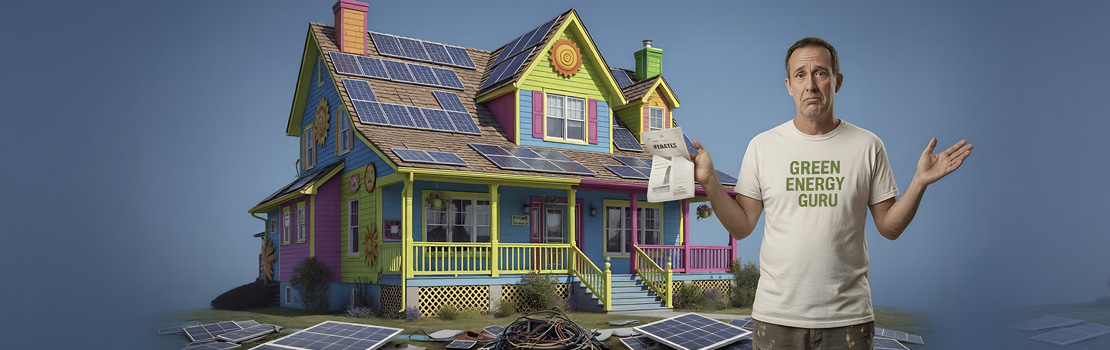
As solar product incentives continue to grow across Australia, more and more property owners are rushing to secure their own panels to cash in on numerous government rebates and grants. But with this surge in demand has also come a wave of low-cost, low-quality solar deals that promise big savings upfront yet often deliver the exact opposite.
From system failures and costly repairs to the very real risk of losing your eligibility for government grants altogether, what looks like a bargain on cheap solar panel installation can very quickly unravel into a financial disaster. Before committing to the cheapest quote you find, you should understand how rebates and grants work as well as why cutting corners on your solar could end up costing you thousands more in the long run.
Let us break down all you need to know about protecting both your investment and your government support while starting your renewable energy journey.
Understanding How Solar Rebates & Government Grants Work
There are various state and federal government incentives available for properties across Australia. It is important to understand the differences between which kinds of programs you may qualify for so you can make an informed decision.
Which rebate suits one property best will depend on what kind of solar solutions they adopt. Here is a brief breakdown of the differences between rebates and grants.
What Is a Rebate?
A rebate is a type of financial assistance provided by governments aimed at reducing the initial installation costs of essential services. In recent years, numerous state and local governments have introduced a variety of different rebates aimed at helping property owners and business owners reduce energy costs by installing new sustainable and energy-efficient utility solutions, like solar panels, solar batteries, and solar water heaters.
Rebates are often applied as credits on future bills charged to households and businesses. The Victorian Solar Power Rebate, for example, as well as various Queensland solar rebates, are state government rebates that were introduced to help refund some of the out-of-pocket costs for first-time solar installations.
Many rebates often have a limited number of funds available and close when maxed out, so there are also federal rebates available that people can opt for instead, such as the cheaper home batteries rebate and other federal rebates.
What Is a Grant?
Whereas a rebate is a partial refund of a payment already made, a grant is a sum of money given to an individual or group for a specific purpose with no expectation of repayment. Grants can be offered by the government at the state, local, and federal levels, such as the NSW Solar for Apartments Residents Grant.
A government grant is often awarded to an applicant for the implementation of specific projects, usually aimed at providing specific outcomes that align with set priorities. Governments award grant funding for many reasons, including stimulating economic growth, supporting innovation and infrastructure, or enriching communities.
If you are unsure which grant or rebates you may qualify for, please feel free to contact our team of solar experts for help exploring your options. Both options are available to property owners simultaneously, so there’s no real reason why you should feel the need to resort to cheap solar.
How Cheap Solar Could Void Your Government Grant
If you qualify for one or more government-led grants or rebates, then you may stand to save money on installing your own solar panels, bringing your renewable dreams one step closer to reality. But this doesn’t mean you should settle for buying cheap solar. In fact, by opting for less-than-premium solar installations, you may very well waste the money you save from your rebate or grant—or worse, void it.
Many grants are very specific about which types of products count towards financial assistance. There is often a strict list of requirements for approved panels and inverters with warranty stipulations that must be followed to qualify. If you make the mistake of installing the wrong type of products for the sake of saving a few bucks, then your installation may end up disqualifying you from extra incentives.
Similarly, many rebates and grants require professional installations by accredited installers. Installers must be accredited to ensure solar setups meet industry safety standards and are compliant with Australian regulations. Rebates and grants can be denied or revoked if installation is non-compliant or deemed unsafe.
By using cheap, non-approved products and suspicious, unaccredited installers for your new solar, you not only risk coughing up more money up-front, but you also risk settling with shoddy workmanship, shoddy parts, and a jeopardised renewables future.
The Other Risks of Cheap Solar Systems
Aside from potentially losing out on your rebate benefits, cheap solar panels also pose significant material risks. Here are some of the other risks you face when buying cheap solar and settling for paying less.
Cheaply Made Panels
Poorly built solar panels will be less energy-efficient and offer a reduced energy output. If panels are made using cheap materials, then they will degrade much more quickly, resulting in more frequent failures, often requiring regular upgrades, repairs, or even replacement. You will likely spend more money keeping your cheap solar panels afloat than if you had simply opted for premium solar panels in the first place.
Inferior Inverters
At the very heart of your solar power system is your solar inverter. A cheap solar system will often have an inferior inverter, made of cheap components that are doomed to break down. Inverter failures can pose safety risks as well as potentially void existing warranties. Just like buying cheap panels, buying a cheap inverter is only asking for even more expensive trouble down the line.
Unskilled Installations
Cheap solar naturally comes with cheap labour. Using non-accredited installers can very easily thwart grants and rebates, but they also pose a risk to property safety. Unskilled installers will certainly try to cut corners, leading to improper wiring and bad practice. Not only will a chump installer leave you with a terrible solar setup, but they may also leave you with roof leaks, electrical faults, and a fire just waiting to happen.
Smart Investments Pay Off: Trust Skilled Solar Experts
Cheap solar may look appealing at first, but the risks far outweigh the savings. A quality system ensures greater reliability, long-term savings, and trustworthy compliance. Investing in a quality solar power system guarantees higher efficiency, longer warranties, and a dependable support system, guaranteeing your eligibility for government rebates.
Protect your solar investment and your government grant by choosing trusted products from accredited and award-winning installers like our Solargain team. Contact us today for a free quote to start your solar journey right the first time!
Get a FREE solar quote today!
