Solar Incentives Are Still Available

Submitted by Webmaster on Thu, 12/03/2015 - 07:16
Solar Incentives Are Still Available

 

There’s no doubting it. Renewable energy is one of the hot topics of 2015. And whilst the debate around the state of solar rages on in Government and the media, it’s not always easy to gain a crystal clear idea of the incentives that come with making the switch.

Whilst the misinformation regarding solar can sometimes muddy the waters, you can rest assured that solar is here to stay and there’s still plenty of reasons to get on board.

Up-Front Savings - STCs

Most residential solar owners can continue to take advantage of a rebate (or STCs – Small Scale Technology Certificates) when purchasing solar panels.

The STC can be sold following installation to offset the cost of your system.

Alternatively, you can receive an upfront discount at the point of purchase through retailers such as Solargain. This government incentive affects the one-off price of purchasing your solar panels, and depending on your state, it can save you thousands. For more information about specific up-front savings in your region, ask us.

Feed-in Tariffs

Feed-in tariffs pay you, the solar power owner, for electricity generated and fed back into the grid. As you can see in the graph below, the minimum feed-in tariff varies from state to state. Whilst electricity retailers cannot reimburse you for less than the figures stated below, they can opt to pay you at a higher rate.

When considering feed-in tariffs, our tip is to do your research before committing to an electricity provider. It’s a good idea to shop around to ensure you’re getting the best tariff price. Some retailers offer additional incentives over and above the legislated amount for solar power owners.

A Lifetime of Benefits

We haven’t even mentioned the huge annual savings your household can make on the otherwise rising cost of energy bills (make sure to check out our savings calculator!) Most solar power systems pay themselves off in less than five years, some even sooner. Solar power systems also add value to your home and importantly reduce your impact on the environment.

5 million Australians (And Counting!)

That’s how many Aussies are experiencing the benefits of clean solar energy. Join the bandwagon to take advantage of the great incentives that are still available and enjoy a lifetime of advantages.

*Figures stated above were true at the time of publishing, but may be subject to change without warning.

5 Green Apps for Your Smart Phone

Submitted by Andrew on Thu, 12/03/2015 - 07:13
smart apps


Welcome to the age of apps. Smart phone apps that is.

Where pretty much every part of your day can be enhanced, simplified, tracked and recorded by a little square thumbnail that sits on your phone’s background. Incredible isn’t it?

OK, so maybe not all apps are that life enriching…

Luckily for you, we’ve sorted through the sea of apps out there to bring you five ‘greeny’ favourites that will help you to make a positive impact on our environment.

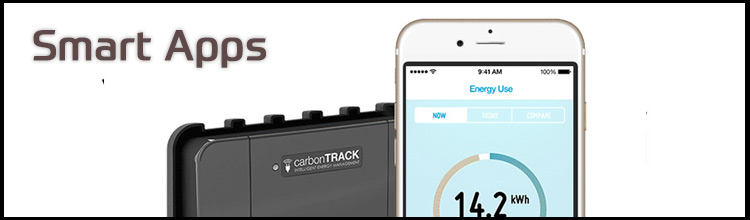
CarbonTrack

If you tracked your business’ carbon footprint, would you like what you saw?

CarbonTrack is an app designed to give businesses an idea of the CO2 emissions produced by their daily activities. CarbonTrack is particularly beneficial in helping understand: 

  • The impact made by employee travel methods
  • The energy savings that can be made by switching office equipment off
  • The environmental effects of different types of business waste

While measurements aren’t 100 per cent precise, the app is a sure fire way to increase awareness about sustainable approaches in the work place.

iRecycle by Earth 911

If you’ve ever asked yourself ‘can I recycle this?’, iRecycle is your perfect app.

iRecycle provides more than 1,600,000 ways to recycle over 350 materials. Plus it’s ultra handy in helping you find convenient local opportunities for recycling. Browse through the huge list of categories, choose your material type and iRecycle will tell you exactly where to recycle it.

greenMeter

Let’s face it. Most of us think that we’re the world’s greatest driver. Now we can find out for sure.

greenMeter uses your phone’s accelerometer to rate the efficiency of your driving technique. If you’re light on the throttle, the speedometer will glow green. Accelerate aggressively or hit the brakes late and the speedo turns an angry purple-blue.

This is definitely one to try with your friends on your next road trip.

GreenITers Mobile II

Connect with hundreds of thousands of likeminded individuals who believe in eco-innovations and green technology that helps solve the environmental problems of today.

GreenITers Mobile II is the perfect forum to discuss matters of renewable technology. Everyone from top academics to the average punter can get together to share ideas, new gadgets and scientific breakthroughs. When the latest tech news drops, you’ll be the first to know.

So there you have it, five greeny apps to keep an eye out for. Now all we need is solar-powered smart phones!

Around the World in… Nothing But Solar

Submitted by Andrew on Thu, 12/03/2015 - 07:11
solar plane


The true power of solar energy never ceases to amaze us here at Solargain.

And its seemingly limitless potential is about to be witnessed on a global scale with two Swiss pilots attempting the first flight around the world in a solar-powered plane.

That’s right, the plane will soar over the entire circumference of planet Earth over five historic months on nothing but clean, sustainable, renewable solar energy – not a drop of fuel needed here.

Solar Impulse 2 is the state-of-the-art solar-powered plane in question. The plane is ultra-light (no heavier than a standard family car) largely due to a carbon fibre construct. Its wingspan, however, is as wide as the largest passenger airline (at 72m) and features more than 17,000 solar cells!

Solar Impulse 2, which took 12 years to develop, took off from Abu Dhabi in the United Arab Emirates on Monday 9 March with the aim off completing the voyage in the Omani capital of Muscat.

Mission pilot, Bertrand Piccard, hopes to boost public enthusiasm for renewable energy sources and technologies that reduce dependence on fossil fuels.

‘Miracles can be achieved with renewables such as solar power,’ said Piccard.

‘We want to show that we can fly day and night in an aircraft without a drop of fuel.’

The journey will be arduous for Piccard and co-pilot Andre Borscheberg. The pilots will only be able to sleep for 20 minutes at a time before having to check the plane’s instruments.

Not to mention a rather small cabin size that fluctuates in temperatures in an instant – this isn’t a ride for the claustrophobic.

So, how and what do the pilots eat inside such a cosy cabin?

None other than Nestlé has developed high-tech airline food to fuel the pilots on their record-breaking trip.

The company has been working with the Swiss duo for the last four years to create nutrient-dense food that’s healthy, tasty and suitably packaged.

‘The plane has no fuel but the pilots have to sustain themselves, and this is what we’re best at,’ said Stefan Catsicas, Nestlé’s Chief Technology Officer.

‘The first and uttermost priority is to support the pilots… and to find a diet that would sustain them from an energy point of view, and at the same time would taste well.’

A variety of specially designed meals have been provided along with Nestlé water and Nestle coffee – a whole lot of coffee, we’re tipping.

Solargain salutes the entire Solar Impulse 2 team and we’ll be sure to provide updates on the voyage’s progress. Good luck guys!

40,000 Solar Installations and Counting

Submitted by Andrew on Sun, 15/02/2015 - 06:17
40kinstalls

Solargain is proud to announce the completion of our 40,000th solar installation!

The 40,000 milestone mark is comprised of over 10,000 solar hot water installations and well over 30,000 solar PV installations – an achievement that represents a shift in the mindset of many Australians towards the use of renewables as well as Solargain’s commitment to providing quality, affordable solar power systems that make a difference in people’s lives.

With locations across Brisbane, Melbourne, Canberra, Perth, Newcastle, Sydney and regional Western Australia, we’ve helped customers all across the country slash their energy bills and make a considerable contribution to the sustainability of our environment.

Speaking of slashing bills, the big 40,000 milestone potentially ensures millions of dollars worth of annual savings for Solargain customers collectively, as well as hundreds of millions of kilograms of greenhouse gas emissions.

That’s a significant accomplishment that we can all be proud of.

Especially considering our humble beginnings!

Solargain started as a small hot water business in Perth 20 years ago and has now grown to be one of Australia’s largest integrated solar energy and solar hot water businesses.

We’re now widely acknowledged as industry leaders in the solar energy field for the premium components we offer, our specialist commercial and residential advice and unparalleled commitment to after-sales support and maintenance.

Whilst we’re delighted to hit the 40,000 mark, we’re not about to rest on our laurels just yet. In fact, we’re as passionate as ever to reach the next 40,000 even quicker as interest continues in solar energy solutions.

We will continue to lead the way towards a sustainable future. That means offering our customers the absolute latest in solar energy technology – technology that creates genuine in-pocket savings and harnesses the power of our most valuable energy resource – the Sun.

If you would like to join our growing army of solar power supporters, get in touch with a Solargain consultant to find out how solar PV panels or solar hot water can benefit your life.

Bowser Boom – But What Does It Mean For Solar?

Submitted by Andrew on Mon, 19/01/2015 - 12:01
Bowser Boom – But What Does It Mean For Solar?

The price of oil has tumbled to a five-year low. But how does this impact the solar power industry?

First, let’s barrel in to the background behind cheaper oil.

Why is oil so cheap?

Australia’s plummeting oil prices have coincided (of course) with global oil prices.

Between 2010 and mid-2014 world oil prices consistently sat around $110 a barrel. In recent times, however, Brent Crude and U.S. oil have fallen below $50 a barrel.

There are two main factors driving the price dip – oversupply and increased competition. Oil production levels in the U.S. are the highest they’ve been in 30 years, mostly due to the extraction process of fracking (which has enabled a major increase in productivity). Meanwhile, there’s been decreased demand from oil importers China, Japan and the European Union all of which have experienced a weakness in their economies.

Instead of cutting production to create demand, Saudi Arabia oil cartel OPEC is showing no signs of slowing down in order to push out competition.

Where does that leave solar?

A significant price drop to one form of energy inevitably impacts other energy industries. To give you an idea of the shift felt by investors: In America, First Solar was trading near $72 in mid-September; now it's around $44. Solar City was around $65; now it's close to $50. 

Some solar investors have turned cautious, fearing that cheap oil will erase the demand for alternative energy. Will it, though?

The facts are that oil and solar serve two different customers. Not to mention the growing demand for solar power and renewable energy across many countries.

Whilst oil dominates energy demand in transportation fuels, solar power customers are primarily of two types: public electric utilities and large corporations. Neither of those use oil to generate electricity, and they are not about to start.

Industry analysts are also confident that even with lower oil prices, cheaper materials have still made solar far more practical. Plus, solar panels are inexpensive to maintain and once installed draw upon a free and unlimited energy source – sunlight.

Oil may be cheap, but there’s currently little available infrastructure to convert it to power.

So, solar’s future is still looking bright?

Absolutely! Demand for solar is rising around the world and new technologies and increased competition will continue to drive down costs. Corporate solar customers are fuelling growth. And as policy continues to bend in the favour of renewable energy, many states (particularly in the U.S.) will mandate a significant portion of electricity is obtained from renewable sources.

Fill up on cheap fuel while you can. But make no mistake; solar is in this one for the long haul.

Solargain – A Year In Review

Submitted by Andrew on Sat, 20/12/2014 - 11:41
Solargain – A Year In Review

Can you believe it? 2014 is almost over and what a year it’s been.

As the year comes to an exciting climax, there’s no better time to reflect on the achievements of the last twelve months. But first, we’d like to thank each and every one of our customers – you’ve all played a huge role in spreading the sunny word about solar throughout Australia.

With your help, Solargain has now completed over 38,700 solar power installations – a figure we’re so proud of (as you should be too!).

Speaking of spreading the word, Solargain has also spread its wings, establishing a shiny new Network Distribution Centre in Wangaratta as well as the recent launch of our Sydney operations. After many months of careful planning and research, we’re thrilled to be able to cater for the solar power, solar panel and solar hot water needs of residents in these areas.

In other major milestones, as of October (and for the first time ever) customers installing Solargain’s super-efficient hot water systems could proclaim ‘I got it at Kambo’s!’

Our dynamic partnership with Kambo’s allowed for the well-known household consumer appliances network to sell our leading range of solar products – a match made in heaven! Like Solargain, Kambo’s is committed to stocking the best brands at the best prices, without forgetting the importance of great customer service of course.

Also in 2014, Solargain was again proud to sponsor the Solargain Perth Suns – the official fast-paced lawn bowls team representing Perth in the Australian Premier League. The APL ran over three days in November and our boys managed to make it all the way to the semi-finals before eventually succumbing to the Adelaide Endurance. Well done guys, we’re so proud of your achievements!

As part of our passion for contributing to sustainability and the environment, we buddied up with our friends at Carbon Neutral this year, and have been able to green-up the Australian landscape in a big way.

In partnership with Carbon Neutral, Solargain has now contributed to the establishment of 360 native trees and shrubs through the Turn Emissions into Trees Program.

To help drive a reduction in the planet’s carbon emissions, Solargain planted one tree for every 100kW of solar installed across our entire Australian network during 2013-14. So give yourself a pat on the back for playing your part in the creation of new plant life and the promotion of a greener planet.

And finally, 2014 saw a boom in our service division.

Solargain is now the preferred service partner of a number of solar power manufacturers in the industry. Rest assured, we’re more committed than ever to providing our customers with exceptional lifetime service of solar power, solar panel and solar hot water products.

2014’s days may be numbered, but there’s still plenty of time to make the switch to solar.

Whether you’re a commercial business or homeowner, head on over to solargain.com.au, and power into the New Year with renewable energy!

What Would Australia Look Like Without Coal?

Submitted by Andrew on Thu, 20/11/2014 - 10:32
Australia Future

It seems to be a trademark of so many films set in the future to include beautifully minimal cityscapes, filled with people dressed in polyester and of course, the inevitable whooshing sound of electric vehicles effortlessly passing by.

This classic futuristic scene usually assumes that electricity is the energy of choice, and sourced completely from renewables thank you very much.

Whilst some of today’s nations are well on the road to revolutionising the way renewable energy powers their cities and people, others (like our own) are a little behind – nevertheless Australia has plenty of potential.

In fact, according to Associate Professor Frank Jotzo, director of Australian National University’s Centre for Climate Economics and Policy, Australia can actually reduce its carbon emissions to zero by 2050, without any significant changes to the structure of the economy.

Other expert sources suggest that by this same year, more than 80% of Australia’s electricity needs could be satisfied by solar power, wind turbines, geothermal technology, biomass and other clear energy sources.

Solar power is considered to be a particularly strong candidate for sustainable power generation in Oz, thanks to the ideal conditions presented by most regions of the country.

So, what would Australia look like without coal?

The shift away from fossil-fuels and un-environmental processes is already being seen around the world, but here’s a snapshot of how Australia could look without coal (and an improved environmental attitude):

  • More electrical appliances – From homeowners, to businesses and large corporations – expect to see a lot more high-efficiency electrical products being used, including electric heaters and cooktops replacing gas
  • 3D printing – According to an article on news.com.au, 3D printing could reduce the demand for mineral and base metals, focusing on recyclable plastic manufacturing instead
  • Same meetings, less travel – Many futurists predict that less coal and better technology will mean daily driving to meetings (and even work itself) will be replaced by digital conferences
  • Electric mobility – From personal transportation (cars), to public transport (buses, trains) – electric motors will be powering the fleet of vehicles that get us around. This would also mean the adoption of fast-rail transport between major Australian cities, as
  • an alternative to planes.
  • Better buildings (with batteries) – With a reliance on renewable energy, homes and large-scale buildings will not only be built smarter to conserve energy, but with batteries that will help store the electricity being generated by solar panels or wind turbines during the day

With countless reports documenting the pitfalls of fossil fuels surfacing every week, the shift to renewable energy, and a coal-free world, is not as distant as it seems. If you’ve already installed solar power, you’re one step ahead. If not, perhaps it’s time to seize the moment!

Speak to you soon,

Solargain