China’s appetite for solar benefits Aussie buyers

Submitted by Webmaster on Wed, 26/10/2016 - 12:16
China’s appetite for solar benefits Aussie buyers


Are you still undecided about investing in solar PV panels for your home? If you’re put off by the cost involved, it’s time you had another look because solar panel prices are lower than ever before, meaning now is an excellent time to buy. The reason for this lies in China.


Background

In the first six months of 2016, China experienced a massive surge in the uptake of solar PV systems. In fact, the Chinese installed a whopping 20GW of new solar panels in that time. That’s triple the amount they installed in the first half of 2015.


What does 20GW of solar capacity equate to?

To put it into perspective:

  • Australia currently has a total solar capacity of 5GW.
  • Prior to this spike in the first half of 2016, China had a total solar capacity of 43GW.
  • During the same period, the United States installed 4GW of solar panels, bringing their total solar capacity to 31GW.
  • China has now overtaken the solar industry trailblazer, Germany, whose total solar capacity is just over 40GW, and slowing.


Why the massive increase in demand?

The boom in the Chinese market was driven by the fact that their residential feed-in tariff was scheduled to decrease from 30 June onwards. This prompted a rush among Chinese consumers to have their installation completed by that date.

In a scramble to keep up with China’s increased demand for solar panels, manufacturers built enormous factories, boosting production. With all of their attention focused on the Chinese market, manufacturers tended to overlook other markets around the world, meaning solar panel prices remained static for some time. Yet, once China’s feed-in tariffs dropped at the end of June, so too did their demand for solar panels. In fact, some data indicates that China’s appetite for solar panels has dropped by up to 80%!


What does this mean for us?

This is where Australian customers can benefit. This glut of excess solar panels has resulted in an oversupply issue, meaning prices are plummeting to lower than ever before. Australian customers can invest in great quality solar panels at incredibly attractive prices. It really is a buyer’s market.


Want to make sure you are securing the best of the bunch?

Having been in the solar industry for over 20 years, we are perfectly positioned to help you make the most of this situation. The experienced team at Solargain can help you secure the best possible price on your panels and can guide you to select a quality and reliable brand.

Give us a call on 1300 73 93 55 to find out more about how you can make the most of the current solar panel tidal wave today.

Why You Need to Add Extra Panel Capacity to Your Inverter

Submitted by Webmaster on Thu, 06/10/2016 - 16:53
overloading

Overloading your system makes financial sense

As the cost of solar panels continues to decrease, so too has the cost of adding capacity to your solar PV system. By adding extra panels to your system when it is first installed, you are benefiting from increased production straight away and lower installation costs compared with adding the extra panels at a later date.

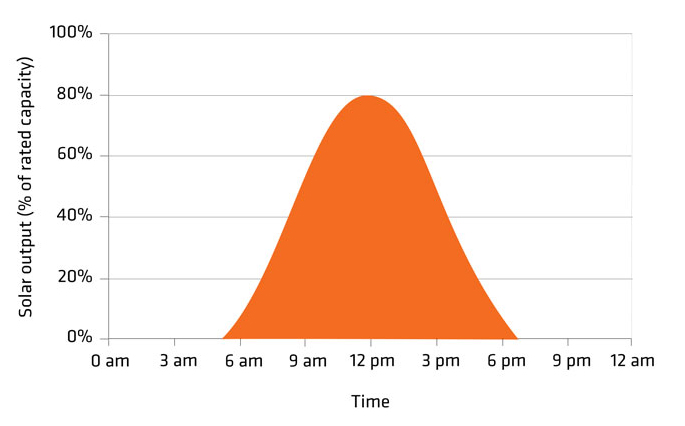
With panels facing multiple orientations, you can achieve even greater savings as your system is capable of producing more electricity over a longer period of time each day, pumping out power earlier in the morning or later in the afternoon compared with conventional set-ups. When you take into account time-of-use tariffs, you have the potential to save even more money as your system can produce more electricity at a time when it is most valuable.

With help from the experienced team from Solargain who’ll tailor a system to your requirements and will position your panels in the most productive location possible, you really can’t go wrong!


Adding 20% capacity equals the best bang for your buck

There are a whole swag of reasons why we recommend adding at least 20% more panel capacity to your system. If we use a 5kW inverter as an example and if we add 20% capacity, that’s another 1kW worth of panels. Here’s why this is such a great value system:

  • The first 5kW worth of panels on a Q.PRO system with a Fronius Primo inverter is $6490, so $1298 per kW. If we add on another 20% (1kW), it’s only going to cost $800 more, which is nearly 40% less than each of the first 5kW. Such good value!
  • Adding extra panels is not going to adversely affect a good quality inverter (like a Fronius or SMA). Fronius inverters are warranted to double the DC capacity (so the Primo 5 could handle up to 10kW if the Clean Energy Council would let us). Plus, as you’ll see in the first case study below, it’s never doing its rated work anyway.
  • When you position your panels in an east/west orientation, you’re not going to get any clipping. Plus, having a nice array on the west will suit many families, as it is producing power later in the day when cooking appliances start up and kids come home from school.
  • We really can’t recall many Solargain customers calling to say ‘we’ve put too many panels up, can you take some off’, however we’ve had plenty of people do the opposite, wishing they’d added extra panels at the start.
  • Even if you feed all your extra power back onto the grid, at $800 for the extra kW, the payback of this kW is less than 7 years.


Proof this approach makes sense

The following case studies are real-world examples of how other Solargain customers are benefiting from this approach.


Case Study One – 5.3kW Q.PRO 265W system with 10 panels facing north and 10 panels facing west and a 5kW inverter.


This is a good example of overloading, but based on the data here, had these clients installed even more panels, their production would be even better.


Even in summer, you can clearly see that the inverter never reaches its maximum capacity. More panels could have been added and the inverter would have operated at maximum.

The western panels push the production out nice and late. Notice that, at 3pm in summer, it is still pumping out 4kW and, at 5pm, it’s pushing out 2.3kW. Great for families – but why not put on more!


By adding just one more kW, March production would have been perfect as it would have just touched 5kW without clipping and it would have produced till really late in the day.


Case Study Two – 6.36kW system with all panels facing north.


With a system this size, you’re always going to experience clipping in summer. However, had the clients considered adding even ten panels on the west, there would be next to no clipping outside of summer and more production later in the day.


Even in summer, the clipping would have been minimal and afternoon production would have been higher.


Case Study Three – 3.975kW system with eight panels facing east and 7 panels facing west with a 3kW inverter – PERFECTION!


This is a fantastic set up which has actually managed to achieve a 32% increase in capacity, yet because of the east/west orientation of the panels. Clipping has still been minimised and only occurs around the peak months (Nov, Dec and Jan).


Even if this system clipped for 60 days, 3 hours each for 300W (which is an extremely high assumption), that’s less than 60kWh per year, which is a tiny sacrifice, as the extra 900W capacity will generate over 1200kWh a year!

Look at how early this system starts producing – in summer, it’s awake at 6am pumping out 300W. Plus, it keeps working until late in the day, still producing 660W at 6pm.


Case Study Four – 6.36kW system with 11 panels facing north-east and 13 panels facing north-west.


The roof design on this house allowed us to make the best of ‘all’ worlds with north-east and north-west panel orientation. This set-up means the system can make an early start and late finish (although not quite as early and late as true east- and west-facing systems), while still only being 45 degrees off north. Had they chosen to favour the west a little more (say with 10 panels facing north-east and 14 panels facing north-west), they could have increased their production at a time when it’s needed most – later in the afternoon.


This is where Solargain’s design expertise really pays off

As you can tell from the examples we’ve provided above, every situation is different. This is why it pays to work with a company that treats every customer as an individual so you’ll have the peace of mind that your solar installation has been specifically tailored to your situation. Let us crunch the numbers to determine exactly what size system you need and the perfect position for your panels to achieve maximum productivity. To speak with one of our experienced solar designers, please call 1300 73 93 55 or contact us via our website.

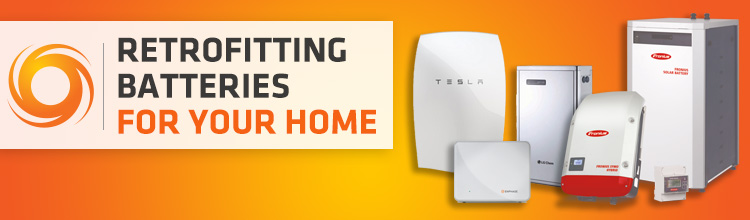
Retrofitting batteries for your home solar power system

Submitted by Webmaster on Tue, 04/10/2016 - 15:21
retrofitting battery


You’ve already invested in a solar PV system for your home (or are thinking about doing so) and, now, you’re wondering how you can maximise your savings by adding battery storage into the mix. Read on to discover just how easy it is to retrofit batteries to your solar power system.

Battery storage is the way of the future

According to the Climate Council, Australia is expected to be one of the largest markets for battery storage due to:

  • the high cost of electricity
  • the large number of households with solar panels
  • Australia’s excellent solar resources

As feed-in tariffs are phased out (meaning households receive less money for the solar electricity they put into the grid) and as electricity prices remain high, the Climate Council anticipates that solar PV systems with added battery storage will become the most economical solution to provide electricity.

As the price of battery storage falls and grid electricity remains expensive, they predict that, by 2018, going completely ‘off-grid’ (and relying solely on battery storage) could be cost-competitive with sourcing your electricity from the grid.

(Climate Council of Australia, 2015)

The benefits of battery storage

Regardless of whether you go completely ‘off grid’ or not, battery storage systems can almost double a household’s self-consumption of solar PV. For example, adding a 4kWh battery to a 5kWh solar system can increase the amount of self-generated solar electricity a household consumes from 30 to 60% (IRENA, 2015).

In short, a home battery system enables you to extract and store electricity from the grid at off-peak times (when it is cheapest) and use the power stored in your battery at peak times (when electricity from the grid is most expensive), significantly reducing your electricity costs

How do I add battery storage to my existing solar power system?

With most existing solar power systems, the best way to retrofit a battery system is with a battery inverter, a metering device and a suitable battery.

  1. The battery inverter talks to the battery and converts AC power from the house into DC power for the battery and vice versa.
  2. The metering device tells the battery inverter when power is going back to the grid and, hence, when to store power.
  3. For help choosing the right battery for your home, visit the battery section of our website.

How can I ensure my system is ‘battery ready’?

Many solar companies promote the importance of having a system that is ‘battery ready’. However, at Solargain, we don’t get hung up on this concept, as adding battery storage to homes with (or even without) solar power systems is really very easy. The hard part about adding battery storage is choosing the right size and type of storage you need.

As mentioned earlier, the best way to determine what system you need is to install a device that monitors and records your consumption data, so you have a history of consumption to base your battery decision on when the time is right. Whether you choose the Enphase monitoring system that we touched on previously or a Fronius system, you’ll be well informed when it comes time to choose a battery.

So when it comes to being ‘battery ready’, we simply recommend you install:

  • a device that records the consumption data in the home and
  • a solar power system that produces enough energy to power your home all day. (You don’t have to install all the solar panels now, but if you plan to go battery down the track, you’re going to need a big enough solar power system to cover your load during the day and have enough spare power to charge the batteries.)

Should I choose a hybrid inverter?

Hybrid inverters are inverters that connect to solar panels and batteries at the same time. While they seem like a good idea now, there are a few things to consider before investing in this kind of system:

  • They’re much more expensive than standard inverters; in most cases, at least $2,000 more.
  • They’re very new, untested and lack basic functions. For example, most don’t even let you do backup power yet, which most people consider to be a standard feature of battery systems.
  • They may not be compatible with the battery you want. For example, the Fronius Symo Hybrid inverter is not available with the LG Chem battery or the Redflow ZCell battery. The Sungrow Hybrid isn’t available with the Tesla Powerwall battery. If you choose a hybrid inverter now, there’s a good chance it won’t work with the battery you want down the track.

With these points in mind, be wary of solar companies pushing you towards a hybrid inverter. Solargain would only recommend you chose a hybrid inverter if you were purchasing your batteries at the same time as the installation. Otherwise, we recommend you wait and purchase a battery inverter once you’ve chosen the right batteries for your needs.

Do you still have battery-related questions you’d like us to answer?

Upgrading your solar PV system to include battery storage isn’t a process you need to wade through alone. You can rely on our team of solar power and battery technology experts to answer your questions and help you choose the best system for your household.

If you would like more information about retrofitting a battery to your solar power system, please give us a call on 1300 73 93 55 or contact us online today.

Is Solar Power really expensive? Busting solar myths

Submitted by Webmaster on Wed, 28/09/2016 - 13:31
busting solar myths


There are so many solar myths out there and, here, at Solargain, we hear them all the time. From misleading web pages to misinformed uncles (we all have one), the truth is that the wrong information leads to poor choices which can cost you big bucks.

Today, we set the record straight – separating solar facts from fiction!

Here are the most common ‘solar stories’ along with the facts which are usually forgotten.

Myth #1: “Solar PV panels are really expensive and unaffordable for most working Australians.”

Okay, let’s start by making it clear that, in Australia, working class families living in ‘mortgage belt’ suburbs, purchase and install more solar panels than any other demographic. The idea that solar panels are an upper-middle-class luxury is a complete myth.

There are plenty of reasons why more and more lower-earning households are choosing solar. The incentive to beat rising electricity costs is the most obvious, but what else?

The cost of producing and installing solar power systems continues to plummet. According to the Clean Energy Council, “the solar panels installed on rooftops today are more than 500 times cheaper to produce than the first solar cells of the mid-1950s.”

What’s even more astonishing is how much prices have dropped in recent times. Only a few years ago, setting up solar was two to three times more costly than it is now. A highly competitive market and enormous global demand continues to drive prices down.

In addition to this, a range of generous government incentives are still available, making solar power even more affordable. Initiatives such as Small-scale Technology Certificates (STCs) and Feed-in Tariffs (FITs) offer homeowners the potential to save thousands of dollars.

Solar power initiatives differ from state to state, so it pays to check which ones you qualify for.

Nationwide incentives

Small-scale Renewable Energy Scheme (SRES)

Households across Australia that install a small scale renewable energy system (solar, wind or hydro) or eligible hot water system may be able to receive a benefit under this scheme to help with the purchase cost.

Sometimes referred to as a rebate program, installing an eligible system allows the creation of Small-scale Technology Certificates (STCs), an electronic form of currency with a value that can be redeemed by selling or assigning them. Most households choose to assign their STCs to their installer for a discount on their system. Refer to the Australian Government website for more information about this scheme.

Electricity feed-in tariffs

Renewable energy feed-in tariffs are available in all eight of Australia’s states and territories. Eligible households and small businesses are paid for the excess electricity they generate from their small-scale solar (photovoltaic or PV) systems.

Western Australia

Between 1 July 2010 and 1 July 2011, Western Australian residents investing in solar were offered a 40c net tariff. This was followed by a 20c net tariff that was available only during July 2011. Both tariffs will continue to be paid until 1 July 2020. New customers can access Synergy's Renewable Energy Buyback Scheme (REBS) for a 7.1c tariff.

South Australia

Since around 2010 until 2013, South Australian residents had access to four different ‘Solar feed-in schemes’ which offered tariffs of 44c net and then 16c net. Existing customers on the 44c tariff will continue at this rate until 2028, while payments under the 16c tariff will cease at the end of September 2016. New customers now have access to tariffs ranging between 5c and 10c, depending on the retailer.

Victoria

Victoria’s Premium (PFit) tariff was open from 2009 to 2011 at 60c net. It will continue for existing customers until the end of 2026. The subsequent Transit (TFiT) tariff which ran throughout 2012 will wrap up at the end of 2016. New solar customers can tap into tariffs of 5c to 10c depending on the retailer.

New South Wales

The New South Wales ‘Solar Bonus Scheme’ operated from 2009 until 2011. The initial tariff was for 60c gross, followed by 20c in the subsequent tariff period. Both tariffs will continue to pay existing customers until the end of 2016. New systems can now qualify for between 5c and 10c credit, depending on their energy retailer.

ACT

Between 2009 and 2011 there were at least five different feed-in tariffs available to ACT residents. They ranged from 30.16c to 50.05c gross. These deals remain in place for existing customers for up to 20 years from the date the generator was installed. New customers must now negotiate their tariff which can vary from 6c to 12c net.

Queensland

Queensland’s ‘Solar Bonus Scheme’ delivered a tariff of 44c net between 2008 and 2012. This will continue to be paid out until 2028 for existing customers. New customers can access tariffs ranging between 6c and 10c depending on the retailer.

Unaffordable? We think not...

Myth #2: “The process of manufacturing and distributing solar PV panels offsets their green credibility.”

This may have been true in the old, ‘dirty’ days, but huge improvements in efficiency make this a big, fat myth today.

In fact, according to Andrew Moore of Murdoch University, his 2008 ‘Life cycle assessment (LCA) of a 1kWp photovoltaic system installed in Australia’ found most of the newest solar PV panels being installed in the sunniest parts of Australia (i.e. Perth) pay back their environmental impact in just 1.7 years! This covers manufacturing, transport and installation.

Moore’s study found that less efficient systems installed in states where it’s less sunny, still generally payback their debt in 2.3 years or less. When you consider that most good-quality solar PV panels will power homes for well over 20 years, these stats become even more impressive.

Green cred? Oh yeah!

Myth #3: “Solar panels and government incentives are responsible for our increasing electricity bills.”

Wrong! Actually, it’s infrastructure upgrades which are driving our power bills up at an alarming rate. Clean Energy Australia states that network costs account for up to 50% of our power bill. With an unprecedented increase in usage, particularly in ‘high-demand’ periods, a massive investment in network and equipment upgrades has been necessary to avoid blackouts. Obviously, it is the consumer who is footing the bill and a key reason why more Australians are choosing solar.

Myth #4: “Once I install solar power, I won’t need to make any more changes to enjoy the full benefit of the system.”

Solar panels are a brilliant investment to make if you want to save money and help the environment, no doubt about that. However, power bill and pollution reductions don’t start and end with the installation of a solar system alone.

A common misconception is that installing solar PV panels gives you free-rein to run your lights, TV, laptop and hairdryer all day with no consequence (what a shock people get when they open their first power bill).

If you really want to maximise your savings and cut your environmental impact, you should also take a good look at your appliances, usage habits, light bulbs, insulation and heating/cooling systems.

You will get the best results from your solar PV system when you adopt a total electricity-friendly attitude.

Myth #5: “Solar panels only work in summer.”

Actually, solar PV panels are not powered by the heat of the sun, rather they rely on sunlight. This means that you don’t have to worry if you live in an area where average temperatures are not overly high. In fact, extremely hot days will often hinder your solar panels' performance, not enhance it.

Your solar PV panels will still convert sunlight into electricity on cloudy days and do not require heat from the sun. Rather than worrying about the average temperature in your city, more focus is required on the placement of your panels. They need to be away from shade and pointing in the correct direction to maximise sunlight.

Myth #6: “Solargain isn’t the best solar power company in Australia.”

We don’t hear this one often and that’s because it’s simply not true! Okay, we’re being cheeky now, but seriously, no other competitor can match Solargain for quality products and absolute dedication to customer service.

Take a look around our website or contact us to find out for yourself.

Why Maintenance of your Solar Power System is Important

Submitted by Webmaster on Wed, 21/09/2016 - 12:26
health check


Are you experiencing issues with your solar system? This may be due to faulty panels, wiring, inverter or even grid issues. Determining the cause of an underperforming solar system can be tricky, which is why you should always get CEC Accredited Installers and Designers to check your equipment.

Our solar technicians are fully licensed professionals who will help you get the most out of your solar power equipment, whether it was installed with us or not. They’ll check your installation thoroughly, detect and correct any existing issues, and determine their origin in order to prevent them from causing failures in the future.


How does a solar health check work?


1. Symptoms and Diagnostic


First of all, our operators will collect as much information as possible about your solar power system (when it was installed and by whom, how often you’ve had it serviced, if you’ve ever encountered issues before and what they were) and work to determine the origin of your issue in order to give it the appropriate response. Here are four common issues:


  • You’ve noticed that your inverter is switching off and trying to restart during the day: this may be because the grid tolerance parameter is set too low, the grid voltage at your property is set too high or because of a faulty meter.
  • Your isolator is burned out and the export to the grid is dropping: this can be due to a poorly terminated, tightened or polarised cable.
  • One of your panels has failed by going into open circuit: there might be a diode failure that’s causing your inverter to run at a small percentage of its capability.
  • Your inverter is failing to start in summer: this is probably due to the hot temperature of the panels and can be fixed by spraying panels with cold water or installing additional panels. 
     

There are as many possible causes to your problem as there are solutions to solve it!


2. Examination and Tests

Then, our experts will inspect your entire equipment and make sure it’s in good condition, functional and well-maintained. This includes your:

  • Inverter
  • Panels
  • Cables (fly leads, pinched cables…)
  • Isolators (wiring termination, tightening, polarity)

They will also take your system’s vitals by measuring voltage and run a number of tests such as inverter live and dead tests, VOC and ISC checks.


3. Preventive Treatment


Optimising your power consumption

Our specialists can estimate your savings and provide guidance on how to use your system better in order to reach your financial and environmental goals. For example, using your electrically intensive devices in the daytime will allow you to use more of what you produce from solar and reduce what you need from the grid at peak rates. Using these items during peak solar production times (10am – 4pm) will see you use more of what you produce, resulting in savings on your energy bill.


Keeping your solar panels clean

We also recommend washing your solar panels regularly in order to maintain them in good condition. However, the associated cost of soiling tests and cleaning of solar panels to the increased performance output does not stack up financially. Do not get us wrong, washing panels at the time of the electrical health check is warranted, but unfortunately, we have seen the rise of window washing companies with no electrical qualifications recommending in some circumstances 3 monthly washes, which is a complete waste of money. A regular shower every 6 months is enough to remove the transient soiling for the more stubborn. Soiling every 12/24 months is more than enough.

Get best-practice advice from our qualified staff!


4. Curative Treatment


Even if your inverter is no longer covered by warranty, we can still help! Replacements begin at $750 for a 1.5kW inverter. Our experienced technicians can carry out an inverter health check to test your system for faults. They can resolve minor faults on the spot and can provide an onsite quote to resolve any larger issues.

If they determine that your inverter cannot be repaired, they can install a replacement inverter during the same visit, saving you further down time and additional call out fees.


Get your solar health check quote now

Let us take care of your inverter headaches. Book your system in for an inverter health check by calling us on 1300 73 93 55 or by completing this form.

What does one kilowatt hour actually mean?

Submitted by Webmaster on Wed, 14/09/2016 - 15:37
What does one kilowatt hour actually mean?


Have you ever thought about how much energy your household uses each day and what that actually means? When you look at your power bill you might see your electricity usage recorded in kilowatt hours (kWh) or in some cases it’s referred to as one ‘Unit’ of electricity (which is the same as 1kWh). But what does 1kWh actually look like?

The average Australian household uses about 16kWh of electricity every single day. While this doesn’t sound like much, the following examples give you an idea of just how much energy that actually equates to.

You use this everyday

Despite being small enough to fit into your pocket, smart phones have become a big part of everyday life. It takes 3.8kWh of electricity to fully recharge an iPhone 6 every day for an entire year. This means 1kWh is enough energy to fully recharge your phone for 96 days and 16kWh (the average energy consumed by an Australian household each day) will keep your phone charged for over four years.

Every Google search you do uses energy

How many Google searches would you do in a day? Have you ever thought about how much energy they take to run? The energy used in five Google searches is enough to run a 60-watt light bulb for about a minute and a half. 1kWh of energy would enable you to do 3,333 Google searches, while 16kWh is enough energy to run 53,328 Google searches.

A Mars a Day...

If all those Google searches have made you hungry, consider this. One 47g Mars Bar contains 888 kilojoules (kJ). Like kilowatt hours, kilojoules are another measure of energy. The energy in 1kWh is equal to the energy contained in approximately 4 Mars Bars. So if the average Australian household consumes roughly 16kWh of energy each day, that’s the same as the energy in 64 Mars Bars. That’s a lot of energy to help you ‘work, rest and play’. 

Speaking of eating

If chocolate isn’t your thing, how does 150 kilograms of grass, leaves, fruit and bark sound? This is how much food one adult male African elephant eats on average each day (in captivity). The energy contained in 1kWh would be enough to feed 12 elephants, while 16kWh would be enough energy to feed 192 elephants for a day.

One heck of a stair climb

Those elephants might be handy for this next challenge. The energy in 1kWh of electricity is the same energy required to carry one backyard swimming pool worth of water (36,000 litres) up a flight of stairs 10 metres high. If we refer back to our average Australian household energy consumption of 16kWh per day, we’d need to carry that swimming pool even higher than the very top of the Sydney Harbour Bridge (which would be the equivalent of 13.4kWh since it is 134m high). That’s a whole lot of energy!

Think before you flick the switch

So next time you turn on the television or leave your air conditioner running, have a think about what your energy consumption really means. It’s fascinating to consider how much energy we actually consume each day and what it equates to in other scenarios, especially since flicking a switch requires so little energy on our part.

Hanover Solar panel repairs, servicing, monitoring and maintenance

About Hanover Solar panels

Whilst Hanover Solar is a German company, like many other companies, they manufacture from China to ensure competitive pricing in the solar market.

Are there any common issues with Hanover Solar panels?

Although highly reliable, just like any other panels, Hanover Solar panels sometimes suffer from malfunctions such as snail trails and hot spots. If the junction box is faulty, you may notice a short in the array. If you are experiencing a fault that may pertain to your panels, a service technician can help identify whether the issue is repairable.

How do I make a warranty claim on Hanover Solar panels?

Solargain has not previously imported Hanover Solar panels. However as we are experienced in servicing many other manufacturers we can assist by attending and completing required testing to be provided to Hanover for their warranty process.

What if my problem doesn’t fall under the terms of warranty?

Some models are CEC accredited, which means that, if the wattage is suitable, the systems may be upgraded (although you should always get a quote to upgrade all, as it is often more competitive). In any case, we will always do our best to represent you in a fair and speedy resolution and, if we don’t succeed in claiming warranty, we can provide a competitive quote to replace your panels.

Please note that smashed panels will not be covered by warranty. In this instance, Solargain will provide you with a reasonable panel replacement quote or assist you with an insurance claim if the impact is the result of storm damage.

How can I prevent damage to my solar panels?

We recommend that you keep your solar panels clean and have your solar power system checked and maintained once a year. This ensures that your system remains healthy and functional.

Contact Solargain on 1300 739 355 or fill out the form below to book a solar health check.

Know Your Li-ions

Submitted by Webmaster on Mon, 05/09/2016 - 10:41
Know your Li-ions

Choosing the right battery for your solar power system

As an increasing number of Australian households are embracing solar power, we now have greater access to new and more efficient battery storage technology. But how do you work out which one best suits your needs? This guide offers an overview of past, present and future battery technologies, including our recommendations based on years of experience working with these systems.


The end of an era – lead acid batteries

We’ve come a long way since the days when lead acid batteries were the only option for storing solar electricity. You know the ones—those heavy, brick-like batteries that you still find in most cars; that require regular maintenance and are filled with toxic lead.

Previously the battery of choice for most photovoltaic off-grid enthusiasts, lead acid batteries are reliable, relatively safe and cheap. However, lead acid batteries also present a number of limitations as they:

  • tend to deteriorate in hot and humid climates
  • aren’t suitable for deep cycling
  • have a short lifespan if not maintained correctly and
  • require good ventilation.

With dramatic improvements in battery technology over recent years, we now have a much wider range of battery systems to choose from. Plus, as demand increases and competition drives prices down, many of these new technologies are becoming more affordable than ever before.


What’s in a name? Quite a lot when it comes to lithium ion batteries.

There are lots of different lithium ion batteries on the market, each comprising various active materials such as cobalt and magnesium which determine a battery’s properties like portability, thermal stability and lifespan. However, in order to understand their differences, you first need to understand the way lithium ion batteries are named, based on their chemical makeup.

For example, a Lithium Iron Phosphate ion battery is abbreviated using the chemical symbols for each component, LiFePO4. It can also be shortened to Li-phosphate, based on its most active component, phosphate.

Likewise, a Lithium Nickel Manganese Cobalt Oxide ion battery can be abbreviated to LiNiMnCoO2, however it is more commonly shortened to ‘NMC’ based on its active combination of nickel, manganese and cobalt.


So which Li-ion battery should I choose and why?

If safety is your priority, Lithium Iron Phosphate (LiFePO4) batteries like the Fronius Solar Battery Range and the Enphase AC Battery are worth considering. They can withstand high load currents and are less stressed under full charge conditions than other Li-ions, making them the safest type of Li-ion batteries available. They also perform better in hot conditions with very little thermal runaway and they complete more cycles per day than many of their competitors.

In contrast, a Lithium Nickel Manganese Cobalt Oxide ion battery (or NMC) like the Tesla Powerwall is lighter and smaller than a LiFePO4 and it can deliver more power for the space it occupies. Yet, while these benefits are essential for portable electronic devices like mobile phones, laptops and power tools, factors like size and weight become less critical in residential battery systems.

Good news on the horizon for NMC storage will be the arrival of the new LG Chem battery technology which will offer increased cycles per day. Developments like this make NMC technology still worth considering.

Even though a LiFePO4 is heavier and will take up more space than an NMC, we believe it’s currently a better option because it offers a longer life span, greater safety and endurance—features which are critical for energy storage in the home. However if space is your priority, some of the new forms of NMC storage about to enter the market may better suit your needs.


One to watch in the future - flow batteries

While Li-ion batteries are becoming more and more popular, new battery technologies are always in development. Flow batteries (such as the Australian made Redflow ZCell Battery) are one such new technology which are yet to prove their effectiveness in small-scale applications.

Flow batteries rely on an electrochemical reaction which occurs between two separate liquids as they are pumped through the cell. Compared with Li-ion batteries, they can be opened up and serviced or repaired as needed. However with a lot more moving parts, like pumps, flow controllers and storage tanks they may be more susceptible to mechanical failures than Li-ions.

We’ve found that because the Redflow ZCell Battery is only a new technology, it is still quite expensive. Being a low voltage battery it is also hard to pair with a decent inverter. And when look at the big picture, a good quality inverter is the most important component of your solar power system. It does most of the work, providing back-up power when needed, whereas the battery is just a storage unit.

So, although flow battery technology still isn’t your best bet right now, as it improves and is further tested in domestic applications it will certainly be another battery storage option to keep an eye on in the future.


Keen to include a battery in your solar installation?

We have years of experience designing and installing tailor-made solar power systems with the latest battery technology. Beat the rising cost of electricity and never be left in the dark again during local emergencies. Contact us to speak with one of our knowledgeable customer service representatives today about the best battery technology for your household by calling 1300 73 93 55.

Safety Recall: Are You At Risk?

Submitted by Webmaster on Tue, 30/08/2016 - 13:41
Isolator Switch Recalls

A number of DC Isolator switches have been recalled by the Australian Government and if you’ve installed solar power it’s well worth checking your system is not affected.

The DC Isolator switch is an essential solar power system component. It’s responsible for stopping voltage in times when your system needs to be worked on, as well as in emergencies or during blackouts. For solar inverters at a ground level, there will be two feeds connected to the unit for output and input – each of these will typically have an isolator.

There are currently seven DC Isolator switches which have been recalled after being identified as potential fire starters. You can view the complete list here.

The latest DC Isolator model to be recalled is a switch supplied and sold by the company I Want Energy.

The model in question is the HGN4-32DC and is being recalled due to faulty contacts within the device which are a potential fire hazard.

If you’ve installed solar panels, it’s important to check whether your DC Isolator Switch is amongst the recalled list. If it is, it must be changed immediately to avoid a dangerous outcome in the future.

In most cases, you will be able to use our guide to check whether your DC Isolator switch is amongst the recalled models, but if you’re unsure, contact our service department for help.

If your Isolator is not amongst the recalled list, it’s still a good idea to keep an eye on announcements. You can check our website as well as follow us on Facebook and Twitter to help stay abreast of any developments.

Whether you originally installed with Solargain or not, we can assist you to remove your faulty isolator and to replace it with a safe model. Don’t put your home or your safety at risk, be sure your isolator is not a fire hazard.

The Solar Rebate Is Ending Get The Best Solar Power Deal

Submitted by Webmaster on Fri, 19/08/2016 - 11:05
solar rebate ending

The Australian Government’s small-scale technology (STC) certificates scheme will begin phasing out from January 1, 2017.

Though it’s not technically referred to as a ‘solar rebate’ the initiative effectively works like one and so we’ll call it that for the purposes of this article. Introduced in 2011 as part of the Australian Renewable Energy Target (RET), the solar rebate has helped encourage over one million Aussies install solar power, making the technology more affordable.

Currently, most homeowners receive a discount of about $3,990 for a 5kW solar power system. Rather than being stopped immediately, the rebate will be phased out gradually over 15 years until it eventually ends on December 31, 2030 (see below graph).

Solar Rebate Phase Out

Bar chart showing Australian solar rebate phase-out from 2020 to 2030 for a 5kWh system.

When Should I Install Solar Power?

Over the next few years as the solar rebate drops you’ll likely see advertising from solar power companies encouraging homeowners to ‘get in before it’s too late’. Of course, there’s an element of fact to this – the rebate provides a great incentive and so if you can afford to install now, it’s definitely a good idea.

However, as outlined below, even post-rebate, solar power prices will continue to drop naturally as we’ve seen over the past five years… So the million dollar question: when should you install?

Ultimately, if you can afford to install solar power now (or soon), not only will you reap the benefits of the rebate, you’ll be slashing your electricity bills, saving money and paying off your investment sooner than later. Indeed, there’s no time like the present. But, if now is not the time, don’t fret, solar will always be a sound investment and the cost of the technology is likely to continue dropping.

Will Solar Power Prices Become Unaffordable?

Short answer, no.

Longer answer: The price of solar power has dropped dramatically in the past decade. For example, in just four years the price of a 5kW system has more than halved. That’s a decline of over 15% a year – and even better, you’re paying less for more sophisticated equipment as technology continually improves.

Even if the reduction in costs of purchasing solar power stabilise between 8-10% they’ll still likely  neutralise the impact of losing the rebate. 

One variable which could affect this is if the rebate is removed immediately and not phased out.

Whilst this is unlikely, the Renewable Energy Target has come under threat by the Government before and if the Liberal Party is re-elected, there’s a chance they could try to end the scheme early. As already evidenced by the People’s reaction in June last year, this wouldn’t be a popular move – but it’s worth keeping an eye on.

What About Solar Hot Water?

Solar hot water systems receive a rebate too and this will also be phased out. This is due to begin at the start of 2022.

How Do I Find Out More?

No matter when you plan to install solar power, it will always be a sound investment for most average homeowners. To find out more about installing or the solar rebate, talk to us today.