Solargain Roof Mount 300L Single Panel Electric Boost

Product Description
Improve the energy rating of your home and SAVE! Use the sun’s unlimited FREE energy to provide up to 80% of your hot water heating needs.
Product Features
Ideal for small roof spaces
All copper collector with black chrome selective surface
Collector and storage tank manufactured to AS/NZS 2712
International quality standards
Suitable for small to medium households
Nation-wide sales and service networks
Product Warranty
5 years parts and labour on tank and collector
1 year parts and labour all other components
Product Suitability
5 People

The Duck Curve – And What It Means For You

Submitted by Andrew on Thu, 11/02/2016 - 09:57
The Duck Curve – And What It Means For You


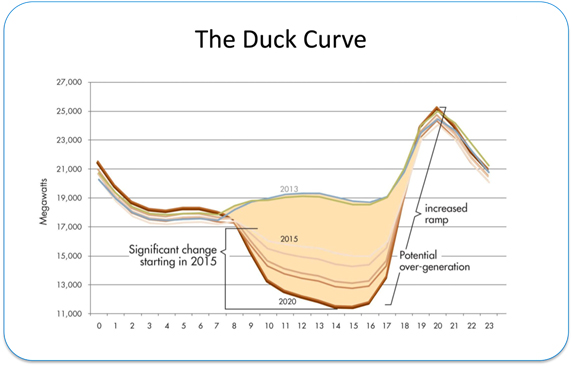
With the huge uptake of residential solar power here in Australia and around the world, a new phenomenon is emerging in the way electricity is generated and consumed through the grid.

And it’s called the ‘Duck Curve’.

This strange sounding occurrence is being caused by the shifting energy demands of the population. Basically, during the day we’re relying a lot less on the grid. Plenty of smart Aussies have installed solar panels, meaning they’re creating their own clean electricity.

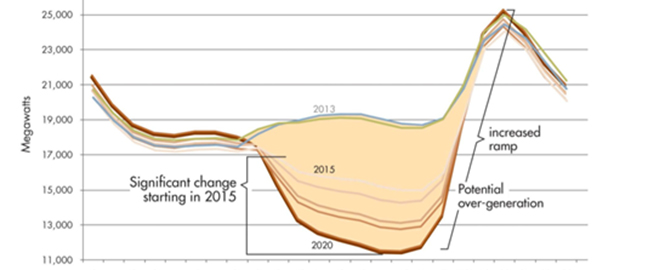
But as the sun goes down (and much of the population returns home from work), a sudden spike in the need for grid electricity occurs. This is best illustrated in the graph below (note its duck-shape!)

the duck curve 

(image courtesy of Green Tech Media)

So what does this mean for you?

A problem that’s emerging in Australia (and is already rampant in major solar-consuming states like California) is the impact that the Duck Curve is having on energy prices.

Because power plants can’t respond quickly enough to manage the sharp evening increase in usage, expensive and dirty power sources are kept idling during the day to step-in when the demand is on. Therefore, depending on your energy retailer, the cost of using electricity during peak times is growing.

Our heroes: storage and efficiency

There are a number of emerging and established technologies available to curb the impact of the Duck Curve and take your electricity savings to new heights.

Battery storage is particularly exciting and in 2016 is set to explode in Australia. We’ll be stocking solar batteries from the leading brands, all of which will enable solar panel owners to store their unused solar energy during the day for use in the evening. Marvellous! 

Aside from solar battery storage, there’s an even simpler way to beat the Duck Curve and it boils down to one word: efficiency.

Whilst we are huge advocates for producing your own clean renewable energy, it’s also just as important to simultaneously reduce your consumption to counteract the Duck Curve in power supply.

How?

Installing LED lighting and other energy saving products is the first place to start as well as learning more about load shifting – which basically involves shifting your energy-intensive activities to daylight hours.

The great news is that energy efficiency is the least expensive and probably easiest way to boost your solar power results. 

If you’re wondering where to start when it comes to choosing and installing efficient products in your home, our team can help – get in touch!

Solargain

What Are You Doing On Australia Day?

Submitted by Andrew on Tue, 26/01/2016 - 08:27
What Are You Doing On Australia Day?


January 26 is the day when we get to celebrate what makes Australia great.

Our country’s national holiday marks the arrival of the First Fleet of British Ships at New Holland (Australia before it was so named) all the way back in 1788.

‘Australia Day’ wasn’t recognised until many years later, with records of celebrations taking place in 1808.

It took more than another 100 years in 1935 until all Australian states and territories used the term and astonishingly, it was not until 1994 that Jan 26 was universally accepted as a public holiday by all states and territories.

As a wholly Australian owned and operated business, we feel a little warm and fuzzy on Australia’s big day, and proud to be a part of what we think is the best country in the world.

This year, Australia Day falls on a Tuesday, if you’re stuck for suggestions, here’s our list of favourite things to do:

1. Get in touch with the country

What better day to explore the country’s outdoor delights than on Australia Day? Pack your car, fire up your bike, prep your boat or lace up your walking shoes and get out there.

2. Get environmental

Show your country some love by doing something that will ensure it stays around for years to come. You could plant some trees in your garden, or think about contributing to initiatives like Clean Up Australia. If you’ve got solar panels, take the time to go outside and inspect them. Are they still completely unobstructed and clean? If not, consider booking a service.

3. Throw a party

There’s nothing like a good Australia Day party. We like ours outside, around the BBQ and with plenty of tacky souvenirs and face paint to keep everyone amused – but only in Aussie colours of course.

4. Jump on the official Australia Day website

The official Australia Day website, www.australiaday.org.au has plenty of great information and resources about January 26, including all you need to know about the annual Australian of the Year Awards and Concert.

So on behalf of all the team at Solargain, have a ripper Australia Day mate – we hope it’s your best one yet!

Solargain

Power Distributors

VICTORIA

Citipower

CitiPower is responsible for providing electricity to around 295,000 customers in Melbourne's CBD and inner suburbs. They own and maintain a network covering approximately 157 square kilometres, bordered in the south by Port Phillip Bay, Balaclava Road and Toorak Road; in the east by Warrigal Road; in the north by the Yarra River, Dundas Street and Moreland Road; and in the west the Yarra River, Maribyrnong River and Moonee Ponds Creek.

CitiPower is 51 percent owned by Cheung Kong Infrastructure Holdings Limited and Hongkong Electric Holdings Limited, which form part of the Cheung Kong Group of companies. The remaining 49 percent is owned by Spark Infrastructure, which is a public company listed on the Australian Stock Exchange.

www.citipower.com.au

Phone: 13 12 80

Jemena

Jemena Electricity Networks is the new name for Alinta AE. Jemena supplies electricity to approximately 285,000 homes and businesses in the north-west greater metropolitan region of Melbourne.

It owns and operates approximately 10,285 kilometres of wires and cables covering an area of 950 square kilometres.

Jemena is now owned by Singapore Power International.

www.jemena.com.au

Phone:131 626

Powercor Australia

Powercor Australia is the largest electricity distributor in Victoria, and supplies electricity to approximately 662,000 customers in Melbourne's outer western suburbs and in regional and rural centres in the central and western areas of the state such as Ballarat, Bendigo and Geelong. Powercor is responsible for a supply area of 150,000 square kilometres including half a million poles and more than 80,000 kilometres of power lines.

Powercor is 51 percent owned by Cheung Kong Infrastructure Holdings Limited and Hongkong Electric Holdings Limited, which form part of the Cheung Kong Group of companies. The remaining 49 percent is owned by Spark Infrastructure, which is a public company listed on the Australian Stock Exchange.

www.powercor.com.au

Phone:13 24 12

SP Ausnet

SP AusNet distributes electricity to 600,000 customers in the eastern metropolitan area of Melbourne and eastern Victoria. They are responsible for a supply area of 80,000 square kilometres which includes 46,000 kilometres of wires and cables.

SP AusNet is a public company listed on both the Australian and Singapore Stock Exchanges. Singapore Power International is the majority shareholder with a 51% interest.

Phone:131 799

United energy distribution

United Energy Distribution is responsible for supplying electricity to over 600,000 homes and businesses in the south-east Melbourne metropolitan area and the Mornington Peninsula.

They own and manage 12,600 km of wires and cables covering an area of around 1,450 square kilometres.

United Energy Distribution is 34% owned by Alinta (Singapore Power International) and 66% owned by DUET (Diversified Utilities and Energy Trusts).

www.ue.com.au

Phone:132 099

ACT

Actewagl

ActewAGL is responsible for distributing electricity to homes and businesses throughout the ACT.

ActewAGL was established in October 2000 as a joint venture between the Australian Gas Light Company (AGL), and ACTEW Corporation. Following a number of changes, the distribution partnership is now owned equally by Singapore Power and ACTEW Corporation, an ACT Government owned enterprise.

www.actewagl.com.au

Phone:13 14 93

NEW SOUTH WALES

Essential energy (formerly country energy)

On 2 March 2011, Country Energy changed its name to Essential Energy, after selling the retail part of its business, including the Country Energy brand, to Origin Energy. Essential Energy is an electricity distributor responsible for a region covering approximately 582,000 square kilometres of NSW. The major towns and cities they distribute to include Albury, Bathurst, Dubbo, Grafton, Port Macquarie, Queanbeyan, Tamworth and Wagga Wagga. Essential Energy is still owned by the NSW Government.

www.essentialenergy.com.au

Phone:13 20 80 (24 hour faults)

Ausgrid (formerly energyaustralia)

On 2 March 2011, Energy Australia changed its name to Ausgrid, after selling the retail part of its business, including the EnergyAustralia brand, to TRUenergy. Ausgrid is an electricity distributor responsible for a region covering approximately 22,275 square kilometres of NSW. In addition to being responsible for Sydney's electricity supply, the major towns and cities they distribute to include Barry, Merriwa, Nelson Bay, Scone and Waterfall.

Ausgrid is still owned by the NSW Government.

www.ausgrid.com.au

Phone:13 13 88 (24 hour faults)

Endeavour energy (formerly integral energy)

On 2 March 2011, Integral Energy changed its name to Endeavour Energy, after selling the retail part of its business, including the Integral Energy brand, to Origin Energy. Endeavour Energy is an electricity distributor responsible for a region covering approximately 24,500 square kilometres of NSW. The major towns and cities they distribute to include Blacktown, Campbelltown, Liverpool, Parramatta, Penrith and Wollongong.

The company was set up 50 years ago in order to deliver electricity to Western Sydney and Illawarra regions in NSW. It has expanded considerably and now is the second largest state-owned energy corporation in NSW, distributing electricity to 2.1 million people in NSW.

Endeavour Energy is still owned by the NSW Government.

www.endeavourenergy.com.au

Phone:131 003 (24 hour faults)

QUEENSLAND

Energex

Energex is an electricity distributor responsible for supplying electricity to 1.1 million homes and businesses in South East Queensland.

Energex's distribution area covers approximately 25,000 square kilometres and includes more than 50,000 kms of electricity lines and cables and over 500,000 power poles.

www.energex.com.au

Phone:13 62 62

Ergon energy

Ergon Energy is an electricity distributor responsible for supplying electricity to homes and businesses in rural and regional Queensland.

Ergon Energy operates a network of 150,000 kilometres of power lines and one million power poles. They own and operate 33 power stations which feed energy to isolated areas around the state that are not connected to Queensland's main electricity grid.

www.ergon.com.au

Phone:13 22 96

WESTERN AUSTRALIA

Horizon power

Horizon Power is responsible for distributing electricity to the Pilbara, Kimberley, Gascoyne and the Mid-West and Southern Goldfields (Esperance and Hopetoun), covering an enormous area of some 2.3 million square kilometres.

Horizon Power was created when Western Power was split into four separate businesses. It has taken over responsibility for Western Power's remote electricity supply systems (including some local generation facilities) and the retailing of electricity to customers in most towns of the far north of the State, the Pilbara and Esperance.

Horizon Power is owned by the State Government of Western Australia.

www.horizonpower.com.au

Phone:13 23 51

Western power

Western Power is responsible for electricity distribution in the south-west of Western Australia, from Kalbarri in the north to Kalgoorlie in the east and Albany in the south. The network owned and operated by Western Power comprises 88,000 kilometres of power lines.

Western Power is owned by the State Government of Western Australia.

www.wpcorp.com.au

Phone:13 13 51

SOUTH AUSTRALIA

Etsa utilities

ETSA Utilities is the sole electricity distributor to South Australian homes and businesses. They manage and maintain over 200,000 kms of lines and over 700,000 poles.

ETSA Utilities is 51 percent owned by Cheung Kong Infrastructure Holdings Limited and Hongkong Electric Holdings Limited, which form part of the Cheung Kong Group of companies. The remaining 49 percent is owned by Spark Infrastructure Group, which is a public company listed on the Australian Stock Exchange.

www.etsautilities.com.au

Phone:13 13 66

TASMANIA

Aurora energy

Aurora Energy is an electricity distributor and supplier, owned by the State Government of Tasmania.

They are responsible for the supply of electricity to all Tasmanian homes and businesses, covering an area of 68,000 kilometres, and operate a distribution system comprising 23,000 kilometres of overhead lines and 1,750 kilometres of underground cables.

www.auroraenergy.com.au

Phone:1300 132 007

NORTHERN TERRITORY

Power and water corporation

Power and Water Corporation is an electricity distributor responsible for the entire Northern Territory. They also provide water and sewerage services to the Territory.

Power and Water Corporation delivers services to homes and businesses in residential, regional and remote areas. As well as being the Territory's main supplier, they also generate electricity through gas, diesel, solar and combined technologies.

www.powerwater.com.au

Phone:1800 245 090

Inverter repairs and models we service

Inverter & Panel repairs and service - we repair all inverter & panel brands!

Solargain specialises in inverter repairs and we’re ready to help you get back on the grid, whether you’re a Solargain customer or not. When your solar power installer leaves you in the dark, you can rely on Solargain’s Customer Service team and technicians to conduct your inverter repairs quickly and safely.

Solargain are the preferred service partner for major brands

As the preferred service partner for major brands such as SMA, Fronius and Zeversolar, our reputation as a credited solar inverter repairs company is unmatched by our competitors. Our service technicians are fully qualified electricians and they are CEC Accredited Installers and Designers.

When you contact Solargain about a faulty solar power system, we’ll take you through a number of easy steps to ensure that you get the best solution. In some cases, problem inverters only need a reboot and are not broken at all. In other cases, we may recommend inverter repair or a complete inverter replacement.

Every day you spend with a faulty panel or inverter costs you money. Contact Solargain today and continue to enjoy the benefits of solar power.


Please enter your service request in the form below


Solar inverters and panels we service

Solar PV inverters we service

Solar panels we service

  • Canadian Solar panel repairs
  • CSUN panel repairs
  • GCL panel repairs
  • Hanover Solar panel repairs
  • JinkoSolar panel repairs
  • LG panel repairs
  • Q CELLS panel repairs
  • REC Solar panel repairs
  • ReneSola panel repairs
  • Schott panel repairs
  • SolarWorld panel repairs
  • sunMAX panel repairs
  • SunPower panel repairs
  • ZNSHINE SOLAR panel repairs


Solar Panel & Inverter Warranty Downloads

These warranty terms and conditions provide information such as the period during which your inverter or solar panels are covered by warranty, i.e. the number of years during which you can claim warranty if your solar power unit or modules cease to function correctly. They also detail the type of faults that are covered by warranty and the ones that are excluded. Finally, you will find information about the warranty claim process as well as the repair or replacement procedure.


Enquire about a solar service or warranty below

Manual shutdown procedure - Cloned

The manual shutdown procedure can be a useful tool for solving errors and glitches that you’re experiencing with your solar PV power system.

Follow the guide below to power down your system (and switch it back on again).

If you’re unsure about of any of the steps, or your solar power system looks notably different from the pictures below, call 1300 73 93 55.

Step 1

shutdown step
 

Go to your switchboard and open it. Locate the solar supply main switch and flick the switch to the off position.

Step 2

shutdown step
 

If your solar power inverter is more than 3 metres away from your switchboard, you must locate the switch marked, solar AC isolator. This will be located next to your inverter. If your inverter and switchboard are within 3 metres of each other, disregard this step.

Step 3

shutdown step
 

Go to your inverter and find the switch marked PV Array and DC Isolator. Flick this switch to the off position (in some cases there will be two switches).

Step 4

Your inverter may have a switch marked Inverter Isolator. If it does, flick this switch to the off position. If you cannot locate this switch on your inverter, skip this step.
Your solar PV system should now be completely switched off. All lights and screen displays will be dead. Keep the system off for a minimum of five minutes.

Step 5

shutdown step
 

To re-start your system, follow this guide in reverse order. ie. DC isolator on first, followed by AC isolator, followed by your solar supply main switch.

If you are still experiencing issues, our experienced technicians can help you.

Manual shutdown procedure

The manual shutdown procedure can be a useful tool for solving errors and glitches that you’re experiencing with your solar PV power system. Follow the guide below to power down your system (and switch it back on again).

SOLAR ONLY

If you’re unsure about of any of the steps, or your solar power system looks notably different from the pictures below, call 1300 73 93 55.

Step 1

shutdown step

Go to your switchboard and open it. Locate the solar supply main switch and flick the switch to the off position.


Step 2

shutdown step

If your solar power inverter is more than 3 metres away from your switchboard, you must locate the switch marked, solar AC isolator. This will be located next to your inverter. If your inverter and switchboard are within 3 metres of each other, disregard this step.

Step 3

shutdown step

Go to your inverter and find the switch marked PV Array and DC Isolator. Flick this switch to the off position (in some cases there will be two switches).

Step 4

shutdown step

Your inverter may have a switch marked Inverter Isolator. If it does, flick this switch to the off position. If you cannot locate this switch on your inverter, skip this step. 
Your solar PV system should now be completely switched off. All lights and screen displays will be dead. Keep the system off for a minimum of five minutes.

Step 5

To re-start your system, follow this guide in reverse order. ie. DC isolator on first, followed by AC isolator, followed by your solar supply main switch.

If you are still experiencing issues, our experienced technicians can help you.

SOLAR AND BATTERY

If you have a battery please follow the instructions above and then follow the shutdown instructions on your battery.