New South Wales Solar Bonus Scheme Ending Soon

Submitted by Webmaster on Thu, 11/08/2016 - 10:30
What Can I Do To Reduce My Bills

The New South Wales Solar Bonus Scheme is a solar feed in tariff program paying homeowners either 20 or 60 cents per kilowatt hour for the power generated by their solar energy system.

The scheme, which was designed to encourage solar power installation, closed to new participants in 2011 and applies to over 140,000 residents in NSW.

Set to finish by the end of 2016, the Solar Bonus Scheme has provided its lucky recipients with fantastic financial benefits – but with its demise, these same homeowners may soon experience a shock.

When the Solar Bonus Scheme ends, electricity bills will likely skyrocket for those affected.

If you’re a homeowner who has benefitted from the NSW Solar Bonus Scheme, use this guide to better understand the situation and how you can avoid a dramatic increase in bill costs.

Why Will My Bills Go Up?

The Solar Scheme is based on a gross system, that is, pay-back benefits are based on all of the power being generated by your solar power system (not just surplus energy). That’s great when you’re receiving up to 60 cents per kilowatt hour – but not ideal once that figure plummets to as little as 4.7 cents next year.

Since most homes under the scheme have been fitted with a ‘gross meter’ – a meter which measures all solar power production, these homeowners will be exporting their unused solar power into the grid for next to nothing, and then buying it back in the evenings for a huge premium. 
How big?

Some reports suggest that a home in Sydney with a 5kW system will pay over $4,000 a year in extra electricity bill costs if they make no changes.

What Can I Do To Reduce My Bills?

Fortunately, there are a number of preparations current homeowners under the NSW Solar Bonus Scheme can make to help neutralise their imminent power bill increase. With more than 140,000 homes affected, it’s wise to act sooner than later in order to avoid time delays.

1.Change Your Meter

As mentioned, basically all homes under the Scheme will be fitted with a gross meter which measures all solar power output.

This will need to be changed to a net meter which only records surplus energy and enables solar electricity to offset expensive grid power consumption. For homeowners no longer receiving the Solar Bonus Scheme rate, you’ll be able to access far better value from the solar electricity you generate.

Even better than a net meter, you also have the option to install a smart meter.

These offer high-tech features and can record your consumption and production of electricity at regular intervals (e.g. 30 minutes), communicating that information back to the electricity retailer for monitoring and billing purposes.

These meters can usually be configured to work in either net or gross metering modes.

As part of the NSW smart meter roll-out, under the Electricity Supply Amendment (Advanced Meters) Act March 2016, most energy retailers will be offering to change old meters. However, this is likely to be on an ‘opt-out’ basis, meaning you could lose your current feed-in tariff bonus rate early – it will pay to ask before signing up.

If your energy retailer is not going to change your meter (or you’re going to upgrade your system capacity) Solargain can help fit a new meter to your home.

2. Upgrade Your System

The price of solar power has dropped considerably over the past eight years.

It was common for homeowners prior to 2011 to install smaller-scale systems in order to keep costs down. Expanding your 1.5kW, 2kW or even 3kW system can make a significant difference to your savings. For example, whilst a 1.5kW system can typically save you up to $590 a year (depending on your location and the installation), a 3kW system has the potential to save you up to $1180 every year and a 5kW system as much as $1990.

Most existing solar power systems are easily upgraded and as previously mentioned, for a fraction of the cost compared to installing solar power over five years ago. Other factors, such as your available roof space and current electricity usage, also come into play.

Talk to Solargain for more information about upgrading your existing system to reap greater electricity savings.

3. Consider Storage

Solar battery storage is now a viable option for many homeowners. The next generation of solar battery storage units are lighter, smarter are more affordable than ever. Battery storage units work by collecting and storing excess energy created by your solar panels through the day, for use at night time. They can help reduce your dependence on the grid, in turn reducing the cost of your power bills. Learn more about battery storage.

4. Consider Solar Hot Water

Heating water remains one of the most energy-intensive processes in homes today. Like solar panels, installing solar hot water is more affordable today than ever and will help slash your water-heating costs as much as 80%. Solar hot water is safe, reliable and a sure-fire way to reduce your energy bills.

5. Find The Best Utility

Not all energy retailers are equal. If you have a solar power system, it definitely pays to shop around to find a retailer with the greatest benefits for solar supporters. These may come in the form of special incentives, discounts as well as competitive feed-in-tariff rates.

If you’re having trouble comparing energy retailers, get in touch with us and we’ll help you identify the top contenders.

6. Act Early!

Whatever you do to help neutralise the price hike, we recommend you start sooner than later. With over 140,000 other homeowners going through the same situation, the solar power industry is gearing up for a lot of demand in a short amount of time. To avoid delays, start a conversation with us today to assess your options.

How Solar Panels Work

Submitted by Webmaster on Tue, 02/08/2016 - 15:52
how solar panels work

Solar panels although simple they are far from boring. It’s only until you learn how solar panels work that you truly appreciate how clever they are.

So, how do solar panels work?

The first thing to know is that panels rely on light from the sun, not heat. In fact, most solar panels become less efficient in extremely hot conditions.

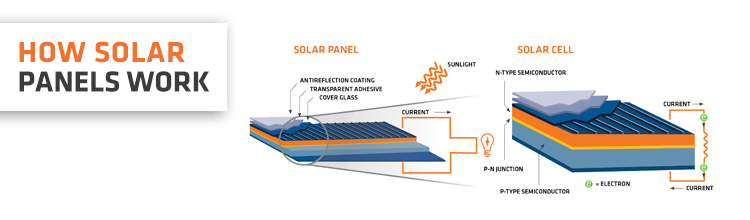
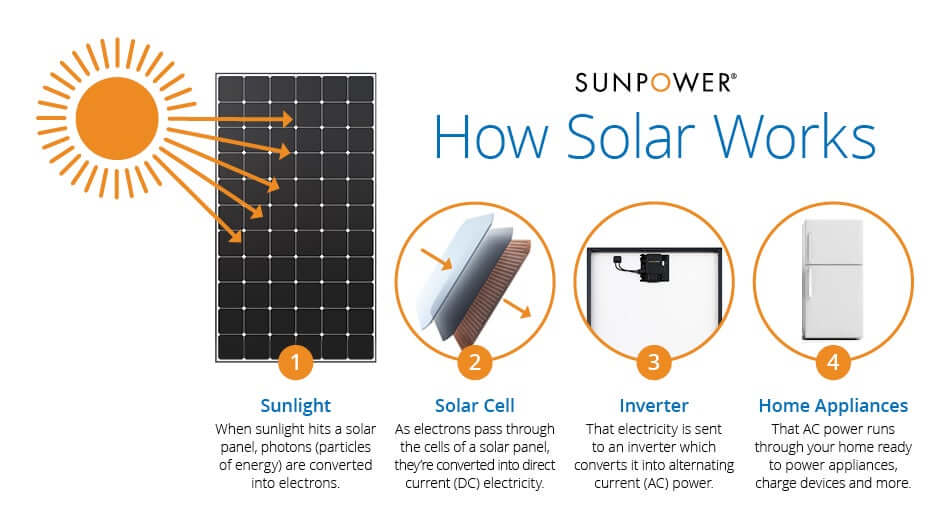
Solar panels convert sunlight into DC electricity. When photons from sunlight strike the silicon cell in the solar panel, electrons are released. The freed electrons race around and, with the help of an electric field, create energy in the process.

how solar panel works

The electrons flow through the panel and string (which connects each of the panels on your roof in a traditional set-up) eventually making their way to the solar inverter.

The inverter converts the DC power from the panels into AC electricity for your home. Your inverter also changes the voltage from the panels to match the voltage in your house (which is around 240V).

In most residential set-ups, excess power created by your solar panels is fed back into the grid, meaning your utility may credit you the next time your power bill arrives. Increasingly, homes are being fitted with solar batteries which store additional power for later use.  

More on solar panels

Solar panels are made up of interconnected ‘silicon cells’ joined together to form a circuit. They may look the same at face value, but they come in different sizes, styles and are available for different purposes. A typical residential panel uses a 60-cell configuration, with larger 72-cell panels often fitted in large-scale installations.

When space is tight or flexibility is the order of the day, smaller panels (coupled with micro inverters) are also an option.

It always pays to choose premium quality solar panels over cheap and inferior alternatives. We’ve covered this extensively in a previous blog, but basically, premium panels will have cells that contain purer silicon (to prevent micro-cracks), less deviation between the cells (eliminating mismatch) and higher efficiency and longevity. This all combines to give you a smoother solar energy experience and one which is more likely to meet and exceed your savings expectations.

Find out more

If you’d like to find out more about individual solar panel specifications, check out our products page. Here you can research and compare performance and specifications of solar panels from a range of leading global brands or contact us to find out more

What It Takes To Be A Quality PV Supplier

Submitted by Andrew on Thu, 28/07/2016 - 00:00
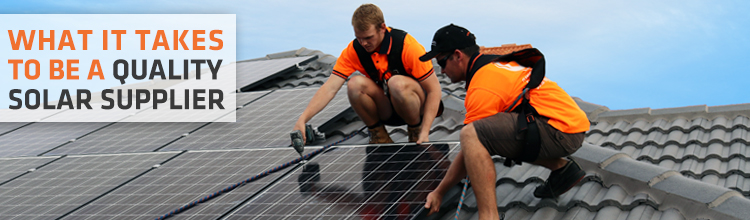
What It Takes To Be A Quality Solar Supplier


Eggs, milk, flour & butter. If you gave those ingredients to a toddler, would you expect them to make a delicious soufflé? Or a mess of your kitchen? Plenty of customers shopping for solar go through hours of research to identify good panel and inverter brands, but then make the mistake of choosing a solar company to install those products for the cheapest price. That's a recipe for disaster!

Choosing good solar panels and a quality inverter is only the first step towards a smooth experience.

In a recent study by CHOICE on solar power installations, 25% of people said they had to report faults with their system and needed support. Interestingly, less than 20% of these were due to faulty panels or inverters. Low quality equipment like breakers, cables and isolators are often to blame, as is poor workmanship.

When solar power systems are not installed properly, you risk roof leaks, poor system performance, and even fires. Also worrying, is when product warranties are unknowingly voided because manufacturer's installation instructions were not followed.

Think you’re covered by workmanship warranty? Hundreds & hundreds of solar companies have disappeared over the years, leaving customers up the proverbial creek when it comes to after-sales support.

People searching for a long-term solar power investment, need to identify a quality-focused solar company– not just quality products.

Here’s what you need to know about what it takes to be a quality solar supplier:

1. Solar power companies come and go, as do warranties

Countless solar power companies have disappeared in the last few years, and when they vanish so does their customers warranty support. These customers now have to try deal directly with the manufacturer if one of their components fails. Australia purchases less than 2% of China’s PV production, so it’s hard to imagine these large manufacturers (some with no Australian subsidiary) treating Aussie customers as a priority when it comes to faulty equipment.

At Solargain, we’ve been installing solar power for over 21 years. We’ve seen every rebate, downturn and shake out. We’ve proven we’re capable of honouring long-term warranties and we’re here for the long haul.

2. High voltage DC electricity is not safe

Electricity in general is not safe, and in solar power installations, it’s not uncommon to have DC string voltages over 500V. This is more than double the standard voltage in your house.

High voltage DC power is the primary cause of fires in solar power installations, as it has an increased chance of electrical arcing caused by low-quality components and poor workmanship. As such, experienced electricians and high quality components are a must if you want to keep your home safe.

Solargain is one of the most experienced installers in Australia with over 100,000 + installations under our belt. We audit many of our installations in accordance with our quality certifications. This is part of our quality process and helps us deliver high quality installations, consistently.

Additionally, to further protect your system from DC arcing, we recommend inverters with the latest Arc Fault Circuit Interrupter (AFCI) technology

3. There’s a right way to install (and a wrong way)

A government audit of 36,956 solar systems determined that over 21% were sub-standard or unsafe. Pretty shocking stats! On the 'Crap Solar' Facebook page, you'll find some of those dodgy operators named & shamed, along with numerous examples showing the risk of choosing cheap solar.

Following correct installation practices is critical to the overall safety & longevity of any solar power project. At Solargain, we put great emphasis on:

  • Using AC cabling and wiring that’s compliant with AS/NZ 5033 and AS/NZ 3000 quality and safety standards - including AC breakers, switchboard wiring and switchboard identification
  • Using DC cabling and wiring that’s compliant with AS/NZ 5033 and AS/NZ 3000 - including DC isolators, DC cable in roof, module cabling and configuration
  • Ensuring all inverter products are compliant with AS/NZS 4777
  • Mandating that PV arrays comply with solar panel clamp zones, and frame manufacturer specs, including the correct mounting feet spacing and edge exclusion zones.

4. Everyone claims "High Quality" – sort fact from fiction.

There’s not a solar energy company out there that doesn’t claim to do high quality work, so you need to seek independent proof. 

When choosing a solar provider, check whether they are a New Energy Tech Approved Seller - www.newenergytech.org.au/why-buy-from-an-approved-seller. New Energy Tech Approved Sellers must pass annual audits to prove they comply with industry-best-practices.

5. Everyone has thousands of happy customers, so find them online

So many companies boast about their countless happy customers. When this is true, they should be easy to find online. Seeking the opinion of previous customers is a great way to understand more about the company you’re considering, and we highly recommend you take a moment to uncover them. If you can’t find many reviews on a company, then perhaps they haven't been in business very long.

Solargain has consistently scored around 4.5 out of 5 stars on Product Review, Google & Trust Pilot from over 3,300 reviews. The opinions of our customers and other industry experts on independent forums is also something you should consider, and we encourage you to do so.

6. Service departments are rarely as good as they claim

Over 800 solar companies in Australia have failed, leaving over 650,000 "Solar Orphans". For those customers who chose a reputable brand, they can fortunately seek warranty support from the manufacturer's Australian subsidiary.

Manufacturers of solar products know the industry very well, and they know the companies they can rely on to service their equipment. For this reason, it’s no surprise that so many manufacturers choose to partner with Solargain for their servicing needs. 

No other company in Australia commits more to assisting these Solar Orphans than Solargain. We have performed more service calls to solar owners around Australia than any other company, and buying from Solargain gives you priority access to our dedicated Service Team & Service Technicians. This is peace of mind that no other supplier can provide.

7. The Bottom Line: Choose A Quality PV Company

For the reasons listed above, we can’t stress enough how important it is to choose a quality-focused solar provider. This will ensure your solar energy system provides you with the best ROI as well as many years of reliable operation.

With a proven track record for safe and compliant installations, be sure to get a Quote from Solargain.

How To Monitor Your Solar Inverter

Submitted by Andrew on Thu, 14/07/2016 - 15:19
solar inverter monitoring

How To Monitor Your Solar Inverter

So you’ve installed a solar power system. Now all you have to do is sit back and relax for the next few decades whilst it takes care of all the hard work. Right?

Sort of.

If you’ve installed a good quality system, there’s no reason why it won’t run smoothly and efficiently for many years. But nevertheless, switching to solar isn’t a ‘set and forget’ exercise. It’s still important that you service your system annually as well as monitor your inverter regularly to ensure it’s doing what it’s supposed to. Once you’ve mastered monitoring your inverter, you’ll have the added pleasure of measuring just how much free, clean energy your panels are producing. It’s a good feeling.

How to monitor your solar inverter? - Monitoring your inverter helps you to detect simple system glitches as well as more serious complications that may need the attention of a technician. The earlier these are detected, the less time you’ll spend off the grid (and the more cash in your pocket). So here are 4 ways to help you understand how to monitor your solar inverter

1. Check for warning lights

Depending on your inverter model, different warning lights will display if there is a fault with your system. Most solar power inverters these days are able to manage glitches by resetting themselves. However, there may be cases where you’ll need to manually shut down your system. Don’t worry, this sounds more difficult than it is. Plus, we’ve provided step-by-step instructions which are easy to follow.

2. Listen Out

In the morning and late afternoon as some inverters are turning on or off you may notice a flashing light and hear a clicking noise. These are normal functions of the inverter so there’s no need to stress. It’s only when your inverter continues to display an error light throughout the day that you should reset it (using the instruction above).

3. Monitor performance

Consistently monitoring the performance of your inverter is the most important way to ensure it is working correctly. Pretty much all inverter models sold today have an in-built functionality to check ‘yield’ – which is the amount of solar energy your system is producing.

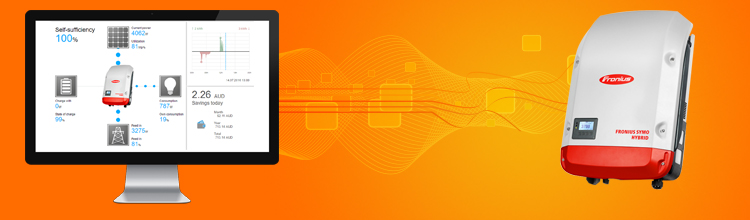
Higher end inverters such as Fronius have additional monitoring such as a Fronius Smart Meter which will maximise self-consumption of the solar power you generate. It has a portal called Solar Web which presents a clear overview of energy use within the home, and intelligently coordinates the energy flows and optimises your energy management.

Fluctuations in system yield can occur for a number of reasons – from changing seasons and shade over panels, to simple inverter malfunctions and more complicated technical problems you have Regular monitoring helps you to detect irregularities early.

Generally, inverters will provide you with daily yield data, some will also provide monthly averages as well. If yours does not, you can simply record your daily yield at the start and end of each month and then divide the difference by the number of days in between.

To get instructions for checking yield, consult your inverter handbook or find yours online using our inverter directory.

4. Check your data

After installation, your solar power retailer should have provided you with paperwork detailing the estimated output of your system. All Solargain customers receive a Solargain Customer User Manual in a black handover folder on the day of installation. To check that your system is working correctly you can compare the data you record each month with the figures provided by your retailer.

In the case where your system performance is falling short of estimated production (and there is no obvious explanation why), you should get in touch with a certified solar power repairer for support.

Solargain services all solar power systems, including inverters sold by companies which are no longer in operation. Get in touch on 1300 73 93 55 or contact our team if you need solar power support!

Invest Your Tax Return In Solar And Gain Outstanding ROI!

Submitted by Andrew on Wed, 29/06/2016 - 11:11
How to make an investment that will save you money

There aren’t many purchases you can make that are simultaneously practical, self-satisfying and destined to save you money.

How to make an investment that will save you money

So rather than using your tax return cash on a bill or other expense, why not use it to make an investment that will save you money by installing solar power instead?

A lot of us view tax return money as a bonus – money that we’d budgeted without, but which we’re certainly happy to have. In this case, using your return on a solar power system is a terrific way to get the most out of every dollar. Aside from the obvious power bill savings, solar panels can increase the value of your home – much more than say, a new couch or a holiday.

Whilst couches and holidays are important, the impact of a new solar power system will provide longer benefits than the holiday and work much harder than the couch in the long run.

On the other hand, as the cost of living continues to skyrocket – returned cash is a much needed help for many homeowners trying to get on top of their bills. Whilst using tax return money to pay utilities is useful, those who can stretch their budget to install solar power will reduce their future bills.

For example, a good quality 3kW solar power system typically starts from around $3500. Depending on where you live and the type of installation, a 3kW system can help you slash up to $1180 every year off your power bills. This means you’ll likely pay the system off within four years.

After that, your return on investment will continue to flourish, hopefully meaning you’ll free up some of your future tax returns for more fun stuff (like holidays and couches).

Curious? Make an enquiry!

Installing solar power may not be as expensive as you think – especially in light of fantastic savings and special deals available across both our solar panels and solar hot water products.

If you’re keen to make the most of your tax return, get an obligation-free quote today.

Blueline Solar Inverters Repairs, Monitoring and Servicing

Who is Blueline Solar?

Established in Cairns in 2009, Blueline Solar Pty Ltd supplied a range of products for solar power systems until their business closed in 2016. They stocked equipment such as micro inverters, string inverters, panels and mounting hardware and sourced their products from overseas manufacturers (including SolarEdge and Eversolar) before rebranding themselves as Blueline products.

Their product line included:

  • Blueline AC micro inverters
  • Blueline MI string inverters; and
  • Blueline XT panels.

Many solar providers installed Blueline’s products including:

  • Capital Solar
  • ACT Renewable Energy
  • Genlux
  • United Renewable Energy
  • Combined Solar
  • Darwin Solar
  • Polaris Solar
  • Queensland Renewable Energy (QRE)
  • Australian Institute of Renewable Energy (AIRE)


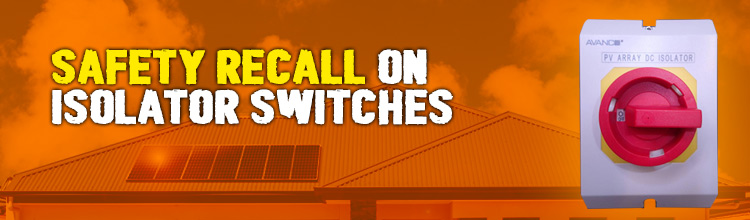
In September 2014, a recall notice was issued by the Queensland Government due to safety concerns about one of the components used in Blueline’s solar installations. It was found that a DC isolator switch in the system could potentially overheat and lead to fires. Blueline Solar were made responsible for replacing the defective switches, however they closed their doors after being declared insolvent in March 2016.


What should I do if my Blueline inverter isn’t working properly?

Having gone into receivership, Blueline are no longer capable of fulfilling their warranty obligations. Thankfully we’re here to help! Regardless of who installed your system, we’ll service and repair any and all brands of solar inverters and products, including Blueline inverters.

For homeowners of problematic Blueline systems, we recommend you invest in an inverter health check. Get in touch with us to reserve your health check today.

During their visit, our qualified technician will:

  • Inspect your solar installation and identify any issues.
  • Repair any faults, where possible.
  • Complete a ‘like for like’ exchange of your inverter, if necessary.

We always bring along a replacement inverter as it is often more cost-effective to replace them than repair them. We can install a replacement inverter during that very same visit, saving you further expenses associated with a follow up visit. This cuts down on any further downtime for your inverter, so your system starts producing electricity again sooner. 
 

Tesla Powerwall

Now with backup, it’s no coincidence Tesla Powerwall is the home storage product everyone’s talking about. Its advanced technology, stunning design and easy installation makes it the perfect choice for homeowners looking to invest in their future.


Fronius Inverter Servicing, Repairs, Monitoring

We service the Fronius inverter range

Founded in Austria, Fronius commenced operation in 1945 as a family business, producing equipment such as welding transmitters and battery chargers. Since then they’ve grown into a global enterprise. In 1995 they added solar inverters to their suite of premium products, entering into the solar industry. All Fronius inverters come with a five-year warranty as standard, however as Fronius service partner plus suppliers, we’re able to offer Solargain customers extended warranties and faster service.

The Fronius inverter range includes:

  • Fronius IG
  • Fronius Primo
  • Fronius Symo
  • Fronius IG Plus
  • Sunpower Fronius

  
Since 2008, we have developed an excellent working relationship with Fronius. We’ve found their inverters to be of an exceptionally high standard with fantastic customer support available after installation. In the situation where your unit has developed a fault, the following troubleshooting advice may be of assistance.

Certain fault codes are unique to particular models in the Fronius inverter range. We recommend you check your unit to confirm which model it is before referring to this list. Fronius IG inverters sometimes display state 104, state 302 or state 443 fault codes. These kinds of fault codes indicate that you may, unfortunately, need to replace the AC board in your unit.

Fronius Primo and Fronius Symo models from the snap series of inverters sometimes display state 461 or state 457 fault codes. If this occurs, it’s likely that you just need to update your inverter’s software. All you need to do is download the update onto a USB and install it from there. If you’d like someone from our service team to come and install the update for you, feel free to contact us today to arrange an appointment.

In the event your unit is displaying a fault that’s different to those described here, it may indicate that the entire inverter needs replacing.

Regardless of whether you are an existing Solargain customer or not, we’re happy to assist with all your Fronius inverter warranty repairs and exchanges. To assist you, we’ll need a copy of the following documents:

  • Proof of purchase showing that your inverter was installed within the last 5 years.
  • The details of your solar installation.
  • The serial number for your inverter, which you can find on the side of your inverter.

  
We’ll submit your claim to the Fronius warranty department for you. Once it’s been approved, they’ll either send us a replacement inverter/parts or they’ll give us the approval to release a Fronius inverter from our stock. Once we’ve heard from them we’ll give you a call to reserve a time for our technician to carry out the work.

Our service team is happy to help with your faulty Fronius inverter, even if its warranty period has passed. If it’s repairable we’ll order in the necessary parts (costs will be incurred). We are able to order the following Fronius replacement parts:

  • the AC board
  • the DC board
  • the screen
  • the internal fan

If more than one component needs to be replaced, it is often more cost-effective to replace the entire unit if it’s within your budget, so keep that in mind when deciding on having your system repaired.


Contact us for more information

If you would like more information about Fronius inverters, you can reach us on 1300 73 93 55. 


7 Ways To Stop A Hot Water System Leaking

Submitted by Webmaster on Wed, 22/06/2016 - 07:20
7 Ways to stop a hot water system leaking


If you’ve noticed that your hot water system is leaking water, it’s a good idea to identify the cause as soon as possible. Often, hot water system leaks are caused by minor issues, though in some cases you’ll need to get a qualified plumber to repair or replace your unit.

Common Causes of Water Heater Leaks

Why do hot water systems leak? There are plenty of potential causes – the most common ones include:

  • The age of your water heater
  • Holes in the tank or pipes
  • A loose drain valve
  • Excess pressure in the tank

The best way to avoid hot water system leaks in the first place is to have your unit serviced as per manufacturer instructions.

How To Stop Water Leaking

Before calling a plumber you can follow these steps to identify the cause of your hot water system leak. Safety should always come first, so if you’re not experienced with gas/electrical appliances, or you need to climb onto a roof, get in touch with a professional.

  • Inspect: The first and most obvious step is to inspect your system thoroughly, including the tank, pipe and valves. If you notice water on the pipework, it could be condensation (meaning that the hot water system isn’t actually leaking). Dry any parts of the unit that appear wet and then check back after a few hours to see if they’re still dry. If they are, it’s unlikely that your system is leaking.
  • Switch off the electricity source: Turn off the electricity supply if you have an electric-boosted solar or electric storage hot water system. You’ll find the main circuit breaker in the switchboard or power box. Don’t forget this step as it’s crucial to your safety if you do discover a leak.
  • Shut off the gas supply: There will be a yellow valve near the gas booster or the gas storage tank. For many older gas storage systems – the valve is on the copper pipe supply that connects to the front of the hot water tank. After doing this, monitor the leak to see whether it stops or improves.
  • Check the valves: The water could simply be leaking from one of the valves. Try to lift the lever on the valve gently and then put it back gently. There could be some debris caught in the valve and this might clear the blockage.
  • Isolate the cold water supply: Try this if the steps above have not been successful. You can do this bynection if you have a tank on the ground, and will generally have a blue handle. If your system is turning off the duo valve. This valve will be located on the lowest copper pipe conmounted on the roof – the valve could be located on the wall or next to the system on the roof. Do not access the roof if it’s not safe to do so, call a licenced plumber.
  • Note the season: Sometimes roof mounted solar hot water systems will leak water from the overflow valve. This generally happens in summer when the tank is too hot and the valve activates to release the super-heated water from the tank. If you notice the water ‘dumping’ from the system in summer, you can install a thermosiphon arrestor valve to prevent this from occurring.
  • Call Solargain: When it comes to hot water systems it’s always better to be safe than sorry. Solargain’s team of hot water experts are on hand to troubleshoot over the phone as well as provide qualified plumbers to your address. Our aim is to have you enjoying hot water (safely) in as little time as possible.


Contact Solargain online or call us on 1300 73 93 55.

Savvy local says research pays off when choosing batteries.

Submitted by Andrew on Fri, 17/06/2016 - 09:22
fronius battery

When weighing up solar power systems for his home, it all came down to reliability, diverse features and the option of a back-up battery for local Helena Valley resident Peter M, who spent six months researching solar and an extra six months researching battery back-up systems for his home.


Peter chose a 5.2kW array with a Fronius Symo Hybrid inverter which offered the flexibility of adding a battery for when they became available.

He also added a smart meter which allowed him to monitor his power consumption to make an informed decision on battery size. It also continues to monitor his system in real-time.

Solar Web Real-Time Monitoring

“As a technical nerd, I did a lot of homework on which inverter and battery solution to buy. The Fronius 5kW Symo hybrid inverter was the winner. It offered a long warranty from a long lived company,

fronius hybrid inverter

The Fronius 5kW Symo hybrid inverter is a wise choice if you are thinking of adding battery storage to your solar power system.

offline ability, upgradeable firmware, exportable data and graph-able statistics from at home or overseas via web on PC or phone,” Peter said.

Next, he had to find a high quality, local installer that he trusted, that knew the products inside out and could answer all of his technical questions.

“After speaking to almost a dozen installers, Solargain won hands down. No question was too hard or skipped, experts were summoned when needed, no lies told, no hard sell,” said Peter.

Once his solar power system was installed, Peter started investigating battery packs. He was invited to attend a battery seminar by Jeremy of Solargain, where he was introduced to the Fronius LiFePO4 Battery System.

“After the seminar I spoke to Karl from Solargain who helped me do the math on why the Fronius system was great value for money in the long run. I went away and did the sums.

fronius hybrid battery

Peter’s research found the Fronius Solar Battery was a standout winner based on output, value for money and build quality.

After taking into account the depth of discharge, cycles, cells and build quality I could see it was the one of the best value for money batteries on the market,” Peter said.

“The final clincher,” he added, “was the fact the Fronius batteries could output much higher peak current than the other batteries and are less likely to trip.”

Satisfied with his research, and after fitting a foam insulated wall, Peter had the specialist installers from Solargain add the Fronius battery to his existing system. The installation itself ran very smoothly and Peter was extremely happy with the service Solargain delivered.

“The pre and post support has been amazing and the team are to be highly commended. Experts through and through,” he said.

The friendly and experienced team from Solargain gave Peter the advice and support he needed from start to finish.

If you’d like help deciding whether a Fronius system would work in your home, or you are considering battery back up and want some information from our experts, simply contact us to speak with someone today or call 1300 73 93 55.