Solar Power Service and Repairs - FAQ

1. Is my solar system covered by a warranty?

Absolutely! Every solar PV panel we sell is covered by a performance warranty, usually spanning 25 years. Additionally, manufacturing warranties can cover your entire solar power system for up to 10 years. As we stock a variety of brands, warranty specifications will differ from product to product.

For more warranty information visit our resources page and download your specific warranty booklet.


2. What does my warranty cover?

Generally, most mechanical defects will be covered during the warranty period as long as they are deemed a manufacturing fault. Most suppliers also guarantee 80% power production for the first 25 years of your solar system’s life.

It is important to understand that warranty terms and conditions vary supplier to supplier. To determine the official warranty guidelines of our products, you can view the warranty booklets here.


3. Are Solargain’s PV panels and inverters tested to Australian quality standards?

They sure are.

In a market flooded with substandard and potentially dangerous imports, Australians must be vigilant when choosing solar products. Solargain only stocks solar PV panels and inverters accredited by the Clean Energy Council – Australia’s peak body for clean energy. Plus, our qualified technicians are specially trained to install solar power both safety and efficiently.


4. Will my solar PV panels withstand extreme weather conditions?

Solar PV panels are designed to withstand harsh weather climates, from blistering heat to freezing cold. Our panels are also put through extreme hail tests, where they endure an onslaught of ice balls travelling at over 80km/h in 11 different impact locations.

So it’s safe to say that they’re pretty tough, but if you’re still worried that the weather has compromised your solar PV panels, please contact us and arrange an inspection. We also recommend annual servicing to maintain optimal efficiency.

5. Why is my solar system not working at night?

Solar systems work tirelessly during the day to produce power for your home. At night however, there is not enough sunlight to sustain operation. As a result, it is completely normal for your solar system to turn off when the sun is down and then resume work in the morning.


6. Will my solar system work during a power blackout?

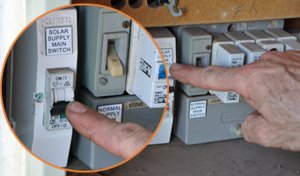
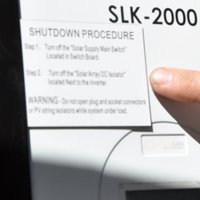
In the event of a blackout, your solar PV system will switch off and remain inactive until power returns. This is a mandatory safety feature of your solar system. It is designed to protect those who may be working on the blacked-out grid system.

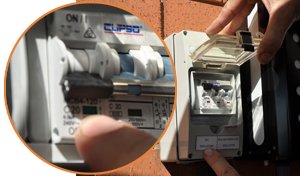
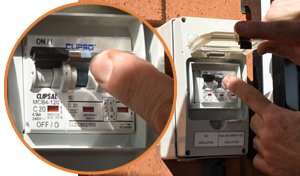
You must ensure that all of the switches on your solar power system are set to onwhen the grid returns to normal. If your switches are turned off, you will not generate solar electricity.

7. Why is there an error/fault description displaying on my system?

Disturbance in the grid, caused by voltage spikes, can make your inverter manually shut down in order to protect your property (and itself!). This can cause an error notice to display.

It is recommended that you monitor your system overnight, as generally it will correct itself. You may also try restarting your system manually following our easy guide. If you’re not comfortable doing this, or your system continues to display an error message, please get in touch and we’ll resolve the problem.


8. Why is my solar system working inefficiently?

If you’ve noticed a substantial change in your energy savings, there are a number of things that you should check before worrying about a fault with your solar power system.

1.Check how many kilowatts (kW) you’ve used in the past, compared with now, using previous and current bills. The power generated by your solar PV panels and inverter won’t grow with your daily/average consumption. Put simply, if you’ve been using more power than normal, you will pay more when your electricity bill arrives.

2.While you’ve got your electricity bills out, check the rate at which your utility is charging you for power. You may be paying more per quarter not because your solar system is working poorly, but because of additional costs issued by your supplier.

3.Take a stroll around your property during the day and observe your solar PV panels. Check that neighbouring buildings, trees or other structures aren’t blocking sunlight from reaching the panels. Though your installer would have ensured an non-obstructed view of the sun at the time of installation, new factors may have emerged that are obstructing your panels from working properly.

4.Visit the common problems and solutions page for more information and advice.

9. How do I check my solar system’s performance and kW generation?

So, you want to check how many kW/h your home is feeding back into the grid?

Sure! Just follow this simple guide.


10. Should I get my solar system serviced?

Solar PV servicing is an easy, affordable and important way to ensure that your solar power system remains safe and effective.

Solargain recommends servicing once a year. Our technicians will perform a comprehensive ‘systems check’ and a detailed clean of your unit. This is also a great time to mention any questions or concerns that you may have about your solar power unit. To find out more or to book a service, click here.


11. Will Solargain service and/or repair solar systems from other companies?

Definitely!

Solargain has helped thousands of customers left stranded by uncaring solar companies, as well as manufacturers and suppliers who are no longer in business. Our specially-trained technicians are kept up-to-date with the technology used in our own products, as well as those of our competitors, so don’t be shy to give us a call if you need to get back on the grid.


12. What happens during a service/repair and how long does it take?

After you fill out a fault report and confirm your details with a Solargain representative, we’ll organise for a technician to visit your property.

Though you do not have to be home while we work on your solar power system, we will need access to your main inverter, switchboard and roof. Servicing times vary depending on the work that is required, but typically most jobs are complete in less than two hours.

If additional work is required, you will receive a new quote, rather than any unexpected charges on your invoice.
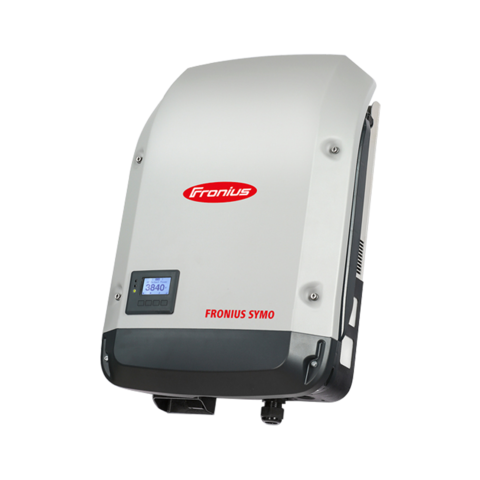
 

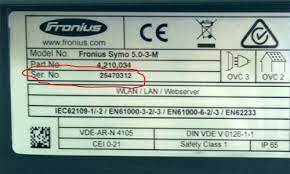
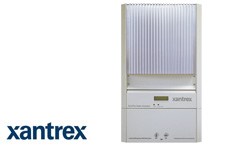
Fronius Symo

The Symo is the three-phase inverter in the SnapINverter range. It has a large class range of 3kW to 20kW, making it suitable for all three-phase applications in both residential and commercial.

 

Inverter Features
75 years experience manufacturing DC power equipment
SnapINverter design
Active Cooling technology
WiFi for online monitoring of solar production
Optional Smart Meter for home energy usage monitoring

Simple things you can do to help save the planet

Submitted by Andrew on Fri, 27/11/2015 - 12:39
simple things you can do to help save the planet

We all know the weather is changing.

Extreme conditions – from blistering heat and wild winds, to freezing cold and flooding seems to be occurring more than ever.

You know that global warming has a lot to do with it, and though you care, you might also feel a little frustrated or powerless about making a change. What can one person do to help save the planet? Actually, quite a lot...

We’ve compiled a list of pollution-punching, emission-crunching techniques you can start doing today to help ensure we’ve still got a planet to call home, tomorrow.

1. Support Green Businesses and Products

You have an incredible amount of power and it’s sitting right in your wallet. Yep, your money and how you spend it, is a great tool for supporting sustainability. Businesses today are more aware of their responsibility to reduce carbon emissions than ever. Whether you’re shopping for insurance, shoes, beauty products, cars or electronics look for businesses that are doing their bit (not just saying they are). 

This includes companies that donate towards a green initiative, use recyclable materials, install solar panels (and other renewable energy products) – and more! 

You can find out this information on business websites, by asking the company directly as well as through online directories like Green Finder.


2. Use Less

Just. Use. Less. 

Most of us require less electricity, less water, less food, less packaging, less petrol, less clothing, less presents… less, well, everything than what we actually consume. Making an effort to consume less not only reduces our impact on the environment, but usually results in saved money too – not to mention the satisfied feeling of a simpler, more fulfilled life. 

Of course, making an effort to reduce your consumption requires a bit of dedication. Focus on each area of your life separately and get the people around you involved too.


3. Install solar

The fact Australian households have access to technology that generates free power from the sun is a very exciting thing. Over 2.5 million Australians are now using the sun to power their homes, a technology, we should remember, that emits no pollution. 

According to a recent report from the (now former) Climate Commission, ‘the rapid uptake of solar PV has already made a contribution to the downward trend in greenhouse gas emissions from Australia’s electricity generation sector.’ 

Installing both solar panels and solar hot water provides an incredible opportunity to make huge savings in pollution and the cost of running your home.


4. Keep Up To Speed

The health of the environment isn’t just critical to our survival; it’s actually a thoroughly interesting topic. From the latest scientific reports, to the contentious agendas of our political leaders – knowing the facts means you’ll make better decisions when it comes time to purchase new products, vote for a new leader and make other important decisions that impact the health of the planet. 

We like the environment section of The Age, as well as treehugger.com, a fantastic one-stop shop for green news, solutions, and product information. 

Think we’ve missed something on this list? Let us know on Facebook or Twitter!

Solargain
Solar Power Savings Over A Lifetime

Submitted by Andrew on Wed, 11/11/2015 - 10:32
Solar Power Savings Over A Lifetime


Here’s an interesting fact:

If you’d installed a Solargain system in January this year, you could have saved over $1500 in electricity bills by now* – just 11 months!

The city you live in, weather conditions and your energy retailer agreement all affect this number – but the point is there are clear benefits of switching to solar, particularly over a lifetime.

An average Solargain system that’s regularly maintained can easily last over 15 years; with the panels expected to endure for 20+.

However, working out annual savings is not as simple as multiplying $1500 by 20. Lifetime savings from solar panels are impacted by the efficiency of panels and changing cost of electricity.

Exciting developments like upcoming battery storage technology could also make a huge difference to the amount of money you save with solar panels over a lifetime.

A recent American study revealed that in the States solar saves consumers an average of $20,000 over 20 years, including savings of over $30,000 in the south east.

Though it’s impossible to determine the exact savings from solar panels over a lifetime, here’s what we do know:

  1. The cost of installing solar panels today is less than a quarter of the price a decade ago
  2. Many predict that solar PV will become the most affordable form of electricity production for retail consumers in Australia (and it’s already competitive in many cities)
  3. Solar panels can increase the value of a home by up to 27%

These sunny figures definitely point to a bright future for solar power in Australia and most importantly a win for the growing list of Aussies putting panels on their roofs.
For a detailed analysis about your personal savings potential, get an obligation-free quote from our team and get the ball rolling!

Solargain

*Disclaimer
Based on a 5kW PV system. Results are dependent on orientation, tilt, and shading of the solar modules and are affected by specific installation situations. Units per day is an average per year and will vary month by month.
Based on 100% of power generated by the system is used by the consumer. Calculations are based on a fixed average cost of energy in Perth, WA and production units and do not take into account specific agreements with your energy retailer (e.g., peak and off peak rates).

Sources

The Critical Decade: Australia’s Future – Solar Energy

Blog - https://www.solargain.com.au/blog/australias-solar-power-revolution-infographics

Why You Should Care About The United Nations Climate Change Conference

Submitted by Webmaster on Tue, 20/10/2015 - 07:42
Why You Should Care About The United Nations Climate Change Conference


The upcoming United Nations Climate Change Conference to be held in Paris in November is a big deal.

The conference may very well set the course for the reversal of our planet’s current climate problems, or worryingly, it could lead to our world’s continued decline.

Starting on November 30 and ending December 11, the Conference will attract high-level representatives from more than 190 nations in hopes that a new global agreement on climate change, including targets to reduce greenhouse gases, will be reached.

Why is Paris especially important?

Nations coming together to discuss environmental issues isn’t a new concept – but historically, global agreements on emissions targets have not been fruitful.

Back in 1992, governments met in Rio De Janeiro and formed the United Nations Framework Convention on Climate Change. This agreement never defined what actions government should actually take to combat climate change and debate continued on for years afterwards, especially surrounding the responsibility of first-world countries versus developing nations.

Eventually in 1997 the Kyoto protocol was established, a pact that required worldwide cuts in emissions of about 5%, compared with 1990 levels, by 2012. The agreement excluded heavy-polluting countries such countries, including China, South Korea and Mexico and was never legally binding because countries representing 55% of global emissions needed to ratify it (and didn’t).

That was until 2004 (thanks to Russia, surprisingly) and the protocol finally came into force. It wasn’t until several years later in 2009 however, when an agreement was finally reached by developed and major developing countries alike to set limits on their greenhouse gas emissions. Almost 20 years in the making, this was a landmark event, but a comprehensive and legally-binding treaty was still missing.

The Paris Climate Change Conference is so important because (it’s hoped) new and worthwhile targets post-2020 will be reached and legally locked in.

What’s at stake?

The world’s global temperature is increasing. According to scientists it’s approaching ‘the point of no return’, that is, past the threshold where global warming damage becomes irreversible. According to a detailed article from The Guardian, ‘that threshold is estimated as a temperature rise of 2C above pre-industrial levels, and on current emissions trajectories we are heading for a rise of about 5C.’

If that becomes the case, we should expect rising sea levels, melting polar ice, droughts, floods and increasingly extreme weather to become the norm.

Where does Australia fit?

The current Government’s attitude towards climate change could be described as ‘complacent’ at best.

Here at Solargain, we think that all countries no matter their size or relative pollution levels should contribute as much as possible to reducing carbon dioxide, as well as conduct regular reviews of best practice.

Greens environment spokeswoman Larissa Waters has slammed Australia’s Paris targets (19 per cent emissions cut on 2000 levels by 2030) and says Australia is simply not doing enough.

‘The Turnbull government's Paris targets are so bad that they not only isolate Australia from the trade and job opportunities of the clean energy future but they could have a wrecking effect on global ambition at these pivotal talks’ Senator Waters said.

‘Direct Action is a complete sham and a fig leaf to cover up the fact we are doing next to nothing.’

You can do your part for cutting emissions by installing solar power and solar hot water on your home. Visit our website to learn more.

For updates on the progress of the 2015 United Nations Climate Change conference find us on Facebook and follow us on Twitter.

Timeline: The History of Solar Power

Submitted by Andrew on Thu, 10/09/2015 - 10:40
The History of Solar Power


Solar power has undoubtedly developed in leaps and bounds from nothing more than a futuristic sci-fi concept, to not only a viable energy source, but Australia’s preferred energy source.

As we enter an important new era in solar power’s history, it’s more important than ever to remember just how far solar power has come.

Our timeline below highlights some of the most momentous achievements in the history of solar power, right back to the discovery of the photovoltaic effect in 1839.

1839 - Discovery of the Solar Photovoltaic Effect

In 1839, a French physicist named Edmond Becquerel, only 19 years old at the time, discovered that there is a creation of voltage when a material is exposed to light. Little did he know that his discovery would lay the foundation for solar power.

1883 – The First 1% Efficient Solar Cell is Created

By 1883 (and as far back as 700 BC), humans knew that sunlight could be harnessed as an energy source. But how could we capture that energy?

Finally, American inventor Charles Fritts came up with a simple design using selenium on a thin layer of gold to form a device producing a modest, but nonetheless ground-breaking, 1 per cent efficiency.

1954 – The Birth of Photovoltaics

David Chapin, Calvin Fuller and Gerald Pearson of Bell Labs in the United States are credited with the world’s first photovoltaic solar cell. More specifically, these are the men that made the first device that converted sunlight into electrical power. They later pushed the conversion efficiency from 4 per cent to 11 per cent.

1920 - Solar Hot Water Becomes a Reality

A technological breakthrough utilising ‘flat-plate collectors’ makes solar hot water viable in southern parts of the United States including Florida and California.

1955 – Solar Cells Sold Commercially

A company called Hoffman Electrics produces solar cells at 10 per cent efficiency and sells them commercially at $25 per cell. At this price, a modern solar system would cost over 4 million dollars!

1985 – New Solar Efficiency Record

By 1985, so many incredible things were already being powered by solar energy, including cars (1955), communications satellites (1962), a spacecraft (1967) and commercial buildings (1974).

It was also at this time that a University in New South Wales set a new solar efficiency record of 20 per cent.

2001 – Australia Introduces a Renewable Energy Target

It was now clear that solar power was Australia’s optimal energy source for the future. Roofs around the country started housing solar power systems as the market opened up with feed-in tariffs as high as 60c/kWh.

2015 – The Age of Solar Power

The solar power industry in Australia undergoes rapid growth during this period. As the cost of fossil fuels continues to rise, solar energy drops to record lows, as does the cost of rooftop installation.

Almost every gizmo, gadget and environment is capable of harnessing the power of the sun’s unlimited resources, from luxury cars, to aeroplanes and, in some cases, entire states and countries!

In 2015, solar power’s future is brighter than ever. And while it’s clear that so much has already been achieved, we know that solar’s greatest achievements are still yet to come.

Australia Still Prefers Solar Energy

Submitted by Andrew on Tue, 18/08/2015 - 11:25
australia prefers solar enegry


Australia Still Prefers Solar Energy!

Australians want more solar energy, less coal and the vast majority think global warming should be taken more seriously – these are the most significant findings from The Climate Institute’s annual Climate of the Nation Review.

Each year for almost a decade, The Climate Institute has produced the Climate of the Nation Review. It surveys more than 1000 respondents to determine the country’s mood in regards to climate change and our attitude towards energy production.

According to The Climate Institute Chief Executive John Connor, this year’s results demonstrate an increasing concern about the damaging effects of climate change, as well as an almost unanimous push towards renewable energy sources.

‘The government and the opposition have an opportunity to join mainstream Australian attitudes with climate commitments and policies, which can limit carbon pollution, encourage renewable energy and clean up our energy system,’ he said in a statement.

Takeaways from the 2015 report:

  • Solar was the most preferred energy source for Australia: when presented with eight sources to choose from, 84 per cent of respondents placed solar energy within their top three preferred options. This is up two points from last year.
  • Women are solar energy’s strongest supporters, with 86 per cent ranking it as their top choice compared to 81 per cent of men.
  • 63 per cent of people thought the issue of climate change should be given more weight, a six per cent rise since last year.
  • Generation Y was most in favour, with 70 per cent of those between 18-34 believing more needs to be done to prevent climate change.

In a year which has seen renewable energy targets wound back, and attacks on wind power from the Prime Minister, support for both solar and wind in Australia’s preferred energy mix has grown – a powerful and greatly influencing response.

Further, the report has found that 71 per cent (up one point) think that that tackling climate change creates new opportunities in renewable energy.

Now it’s over to Government to develop policy that better reflects the public’s views on renewable energy.

In turn, stronger policy in the favour of renewables allows investors to inject money into the industry with greater confidence, resulting in solar energy solutions that are not only more powerful and efficient, but more accessible for homeowners all around Australia.

The people have spoken – are you ready to join them?

Get in touch with one of our solar energy specialists to discover how making your own clean solar energy daily could slash your energy bills for good.

Solar Power And How To Calculate Your Return On Investment

Submitted by Andrew on Fri, 24/07/2015 - 08:47
Solar Power And How To Calculate Your Return On Investment


Contributing less to pollution and more to sustainability are great reasons to buy a solar energy system.

And let’s face it, seeing a return on your investment is a pretty nice incentive too. But how quickly can solar panels pay themselves off and how do you work it out?

Let’s find out.

To calculate your return on investment, there’s four main things your need to know:

  1. The cost of energy
  2. How much energy your prospective solar power system produces
  3. The cost of your system
  4. How much solar energy you produce will be consumed by your home – or more specifically, how much you will be sending to the grid

Now, let’s assume that you intend to purchase a standard 3 kW system – it produces an average of 13.5 kWh of electricity each day.

We’ll also keep in mind that energy currently costs around 26 cents per kW.

Now that we know the essentials, let’s calculate your ROI using one of the following methods:

“My Home Will Consume All of The Energy We Make”

Take a look at your last few energy bills. If it looks like you’ll be using all of the 13.5 kW hours that your solar power system produces, here’s how you would calculate your savings:

“My Home Will Be Sending Energy To The Grid”

Most homes return a portion of the power their system produces to the grid. When this happens, your energy retailer will give you a credit of around 7 cents per kWh. If it looks like your home will be using less than the 13.5 kW hours your system produces, here’s how you would calculate your savings (assuming you’ll be consuming 70% of the solar energy):

The figures above are based on current pricing in Western Australia. For figures specific to your location, check out our energy savings calculator. You should also note that determining how much power you’ll return to the grid can be tricky, which is why it’s important to talk to a solar professional.

In any case though, you’ll be hard-pressed to find a home improvement investment that pays itself off, let alone in as quick a period, as solar power.

Despite this comparatively fast pay-back period, many would-be solar owners are put off by the initial purchase price of a system.

In a recent blog, we highlighted Solargain’s excellent interest free finance options, making it possible to enjoy the benefits of solar panels now, without paying the full price of the system upfront. You simply pay your system off in installments with the help of the electricity savings you make each month.

If you’d like more information about the real in-pocket savings you can make by switching to solar, get in touch with our friendly specialists today.

Australia’s Solar Power Revolution (with infographics!)

Submitted by Andrew on Tue, 30/06/2015 - 13:54
revolution

Australia’s energy sector is undergoing a revolution.

For too long, fossil fuels have been the heavy hitters of energy production. Thankfully (and not a second too soon), team renewables has entered the fray with solar power as a key weapon.

Importantly, the revolution has been consumer-driven. And with technology very much in tune with the energy-saving desires of the people, solar power is flourishing in Australia, even despite the recent tumultuousness caused by Tony Abbott slashing the Renewable Energy Target.

Most homeowners today have the power of choice – that is, the choice of where the energy they use comes from. But what exactly is motivating almost one in six Aussie homeowners to make the switch to solar?

Solar Power Simply Makes Sense

An unprecedented spike in power prices has led to an equally unprecedented boom in the sales of solar power systems.

The Australian Bureau of Statistics (ABS) reported that from 2007 to 2012 the cost of electricity, gas and other household fuels had grown steeply nationwide. The most significant increase in the retail energy price was in Melbourne, where it rose 84 percent.

Meanwhile, the average solar system now costs less than a third of what it did back in 2007.

Better still, it seems that costs will continue to drop. Canadian Solar, one of the world’s biggest solar PV manufacturers recently delivered a detailed update of its outlook, including some exciting forecasts on the future of solar PV costs.

They predict that the cost of solar PV modules will likely fall 25 per cent in the next three years, from US47c/watt at the end of 2014, to US36c/watt at the end of 2017.

Falling solar power costs, alongside more flexible repayment options available to consumers (including Solargain’s interest-free plan) will help to tackle what is currently one of the main reasons for non-installation; up-front costs.

Then there’s the well-documented, real, in-pocket savings that can be made by generating your own solar energy – see our energy savings calculator to see just how much your home could be saving each month and refer to the graphic below (approximate savings)

A new report by PRD Nationwide has also highlighted another significant benefit – solar panels can increase the value of a house by 27 per cent and a unit by 29 per cent.

According to the study, in some cases house values increased by more than $90,000 and units by $109,000 after solar panels were installed.

While solar is booming, its future prospects look even better. Solar energy is getting cheaper by the day, and some studies are even predicting that in five years solar panels will be capable of producing enough energy in six months to pay back all the energy used in manufacturing (meaning that after six months the panels will be a net source of energy).

So, is now the time to install solar power?

You bet it is.

If you’re interested in taking charge and generating your own power, get in touch with one of our specialists today.

Sharing the Sun

Submitted by Andrew on Tue, 16/06/2015 - 12:42
Yeloha Solar Power Sharing


How An American Start-up Plans to Supply Solar Power to Those Without Panels

For a small amount of people, solar panels just aren’t a viable option.

They might be renting in a high rise. Or perhaps they live in an area where their roof is completely covered by shade. And while they would love to be creating their own clean, renewable solar energy each day, their living situation means that it’s not an option.

But what if they could share solar energy with the panel-fitted home across the street?

That’s exactly the idea American start up Yeloha have come up with. They’re looking to share the sun’s energy with those who want to use it, but for whatever reason can’t.

Here’s How it Works:

The system involves two parties – a sun host and a sun partner.

Sun hosts are homes or buildings ideally situated in sun-soaked areas conducive with solar PV. By signing up to be a host, the ‘sun host’ will receive free solar panels including installation and a portion of the solar energy generated by the panels (about 25 per cent).

Sun hosts will remain with their existing utility company, while receiving lower bills because of the energy they’re savings each month.

By connecting with a sun host in their area, sun partners can finally have access to cleaner, cheaper energy produced from their host’s rooftop PV.

In essence, it’s a win-win situation for both parties.

‘We are great believers in this peer-to-peer concept, which I think is pretty unique,’ Yeloha CEO and co-founder Amit Rosner said.

‘We really think solar should be produced where it’s consumed.’

Sun partners (or consumers) are required to sign up for a contract to buy the solar power from a Yeloha installation, which entitles them to net metering credits.

Rosner says a typical agreement will last for three years, with an initial payment of ‘less than $200’. The Boston start-up says that the system could reduce a consumer power bill by an average of 15 per cent.

A test period earlier this year saw ‘several thousands’ of people in Massachusetts register their interest in the program, Rosner said. Yeloha has already completed one solar panel installation, with its output paid for by 10 consumers before it was built. Another 10 or so roofs are in the process of getting panels installed.

While it’s only in its infancy, if Yeloha is able to supply solar power to those who can’t have it installed, it will succeed in bringing the benefits of solar energy to more people – a great outcome for the consumer and industry alike.