SolarEdge Genesis Hybrid

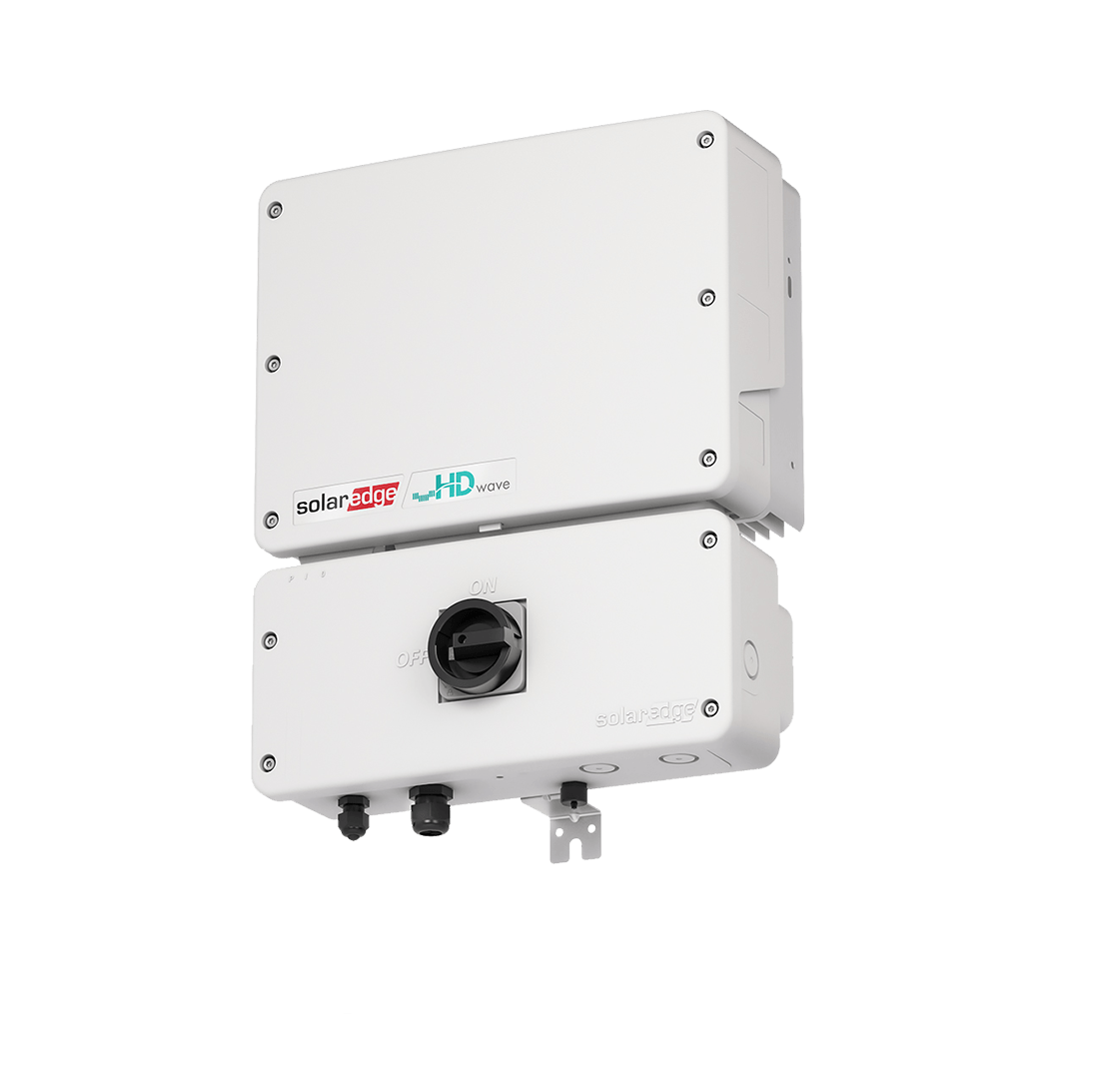
The SolarEdge HD-Wave Genesis combines all the elements you'd expect from a high quality SolarEdge inverter, such as it's predecessor the HD Wave, with new levels of convenience giving you easier designs and faster installations than ever.
Inverter Features
Single string design for inverters up to 5kW Battery Ready Hybrid model
Specifically designed to work with SolarEdge power optimisers for higher energy yield
HD-Wave technology with record-breaking 99% efficiency and high reliability
Built-in WiFi + Smart Meter for online monitoring of Solar production + Home Energy Usage

3 Good Reasons to Go for LG NeON 2

Submitted by Nedjma.Loucif on Tue, 11/07/2017 - 10:13
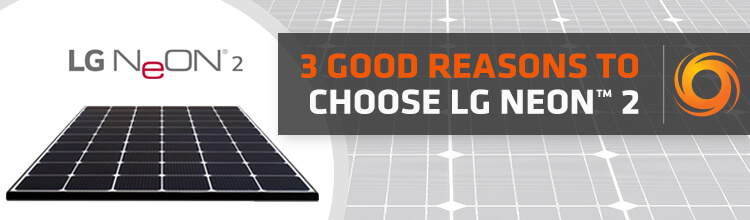
3 good reasons to choose LG NeON 2

LG has recently released the NeON 2, an award-winning solar module already labelled “the panel of the future”. From high performance to low degradation, great resistance, and superior warranty cover, the new model from LG ticks every box!

Whether you wish to make the switch to solar or to upgrade your current PV system, here are 3 good reasons to consider the LG NeON 2:


1. Produce more electricity and save more money

With extra wire busbars, double-sided cells, and better performance in hot weather and in low-light conditions, the NeON 2 is currently the most efficient solar panel on the market. It absorbs larger amounts of light during longer hours every day, resulting in higher power generation.

This allows you to use more energy from the sun and less from the grid. Plus, when you are ready to add a battery to your PV system, you can store some of the energy you’ve produced for later use, or send it back to the grid and be rewarded.


2. Increase the value of your property

LG’s NeON 2 is so efficient that less panels are needed to produce the same amount of power. This means you don’t need to install as many panels on your roof, saving you space for other appliances (such as a solar hot water system) or simply giving your roof a lighter look.

Besides its high performance, the new NeON module also has premium aesthetics. Its black cells & frame give it a smarter look, which will make your roof more attractive and your property more valuable.

Finally, the NeON 2 was designed to support future home features such as battery storage and electric vehicles.


3. Preserve the environment

Going solar will already participate in doing that, but choosing a sustainable panel manufacturer and solar installer will reduce your carbon footprint even further.

Last year, the Corporate Knights Organisation has ranked LG 44th of the 100 most sustainable corporations in the world. Moreover, the plant in which the NeON 2 modules are made is environmentally-friendly, with over 11,000 solar panels on its roof. The materials used to produce the panels are also free of ozone-depleting substances, in accordance with the Homogenous Substance Management system implemented by LG Electronics. Finally, the technology used in LG panels enables them to generate more clean energy than standard modules.

In addition to selecting a clean panel brand, ensure the company you choose to install or service your system is also eco-friendly. By commissioning Solargain, a Carbon Neutral Green Partner, you can rest assured that special attention is paid at every level.


Get in touch

For more information about LG and the NeON 2, please contact Solargain on 1300 73 93 55 or fill out our online enquiry form.

Monitoring your SolarEdge inverter

Refer to the videos below to see how you can best take advantage of SolarEdge's monitoring platform and make the most of your SolarEdge solar energy system, or refer to the guide further down to learn how to use the SolarEdge inverters built in monitoring capabilities.

Use this guide to get started!

Use the four user buttons to control the LCD panel menus: the first button (starting from the left-hand side) is the escape button, followed by Up, Down and, lastly, Enter. Use these buttons to navigate the menu.

Press the Down arrow three times to get to the “Energy Meter Status” screen which is the third screen in the menu. It will show the day/month/year and total figures of production.

The two easiest indicators are the 'Today' and 'Total' functions.

The Today figure refers to the amount of kilowatt hours your system has produced for the day. Since it is a daily reading, the best indication of production will be towards the end of the day, before the sun goes down. You can check this figure against the yield data provided as part of the signed quote.

The other important figure is the Total. It refers to the accumulative total of kilowatt hours produced since the system was installed.

To work out your average monthly production, simply record the difference between your 'Total' figure at the start and end of each month.


SolarEdge inverter service and repairs

If you encounter issues with your SolarEdge inverter of if it is due for service, give us a call on 1300 73 93 55 and we will be happy to attend to your repair or service needs.

Through their best-practice advice and quality work, our specialists will ensure your solar power system is back up and running as soon as possible.


Replace your Existing Hot Water System and Save

Banner Content
The very best in solar hot water! 300L to 300L Solar Changeover. Hurry! this is a limited time offer. 300 litre solar to solar changeover from $3,990* (single panel) or from $4,290* (twin panel). ENQUIRE NOW
Body
Replace your old system with a 300L solar to solar change-over. Fully installed and commissioned by experts and backed by a comprehensive warranty. This is system has been designed by Australian plumbers and is fully watermarked for Australian conditions. Value, quality and lots of hot water.

There's never been a better time to go solar!

Submitted by Nedjma.Loucif on Thu, 18/05/2017 - 13:44
Time to go solar

With higher feed-in tariffs, more affordable solar panels, increasingly productive PV systems and valuable STCs, now is the time to make the switch to solar!

5 compelling reasons to go solar:

  • Rising energy costs

    As energy costs in Australia continue to soar, solar is considered a low-cost energy option.
    With electricity prices across the country set to further increase from July 2017, switching to solar now only makes sense.

  • Continuing government incentives

    Upfront government incentives are still available and can account for a significant percentage of the upfront cost of the system so, even if you are not using all of the solar generated, you can receive a benefit for it from your retailer. Under the Federal Government’s Small-scale Renewable Energy Scheme, Small-scale Technology Certificates (or "STCs") are available as an upfront discount on eligible solar PV systems.

  • Increasing feed-in tariffs

    The Victorian State Government will more than double the minimum feed-in tariff from five cents per kWh to 11.3 cents per kWh from 1 July 2017. This is available to solar and other eligible forms of renewable energy, such as wind, hydro or biomass, with a system size less than 100kW.

  • Dropping panel price

    As technology and manufacturing processes improve, the price of solar panels has reduced throughout 2016 and into 2017. This means it is more affordable to install the larger solar power systems that your energy-intensive home demands, limited only by the size of your roof. Plus, a lower-cost system will pay for itself sooner.

  • Available financing options

    Finance for solar systems is widely available and, in many cases, energy savings can be greater than finance repayments for solar.


Focus on rising feed-in tariffs

Lucrative feed-in tariffs were once the ultimate reward for homeowners that made the switch to solar power. Yet, in late 2016, several State Governments drastically reduced the generous incentives available to customers who feed their unused electricity back into the grid. However, feed-in tariffs are on the rise again!

In these times of rising energy costs, here’s a quick update on the current status of feed-in tariffs across Australia and some insights into why switching to solar is a wise choice for your home.

From 1 July 2017, Victorians with solar photovoltaic (PV) systems will see their feed-in tariff rise from the current minimum rate of 5 cents to 11.3 cents per kilowatt hour. South Australia and the Australian Capital Territory currently operate with no minimum feed-in tariff, while the Northern Territory currently offers a ‘dollar for dollar’ arrangement for their customers exporting their unused energy back to the grid.

There is currently no minimum feed-in tariff rate for solar electricity users in South-East Queensland. However, households in regional Queensland receive 7.448 cents for systems up to 30kW (up from a previous limit of 5kW). New South Wales consumers can earn between 5.5 and 7.2 cents per kilowatt hour for their excess electricity.

Tasmanian homes with a system up to 10kW (single-phase) or 30kW (three-phase) system can receive 7 cents per kilowatt hour. While in Western Australia, different feed-in tariffs apply depending on where you are located and which company supplies your power.


Start saving today!

As solar power incentives come and go, it can be difficult to estimate how much you can save by investing in solar. That’s where Solargain comes in. We have an in-depth understanding of exactly what incentives are available in your state. We can design a system to ensure you are taking full advantage of what’s on offer, saving you money long into the future.

To find out how you can benefit from solar power, give Solargain a call on 1300 73 93 55 or enquire online.

Don't Get Swooped by Phoenix Companies

Submitted by Nedjma.Loucif on Fri, 05/05/2017 - 13:26
phoenix companies

If you are shopping for solar, you may have been warned about phoenix companies which, like their namesake, are reborn from their ashes. But how much do you really know about them and, more importantly, about how to avoid them?

What is a phoenix company?

Although there is no legal definition of a phoenix company, the Australian Securities & Investments Commission, describes this practice as an illegal activity involving “t he intentional transfer of assets from an indebted company to a new company to avoid paying creditors, tax or employee entitlements.”

In order words, phoenix companies are commercial entities which have gone into voluntary administration or liquidation before reopening a new business with the same trading name, location and directors, leaving staff, suppliers and clients unpaid.

Phoenix companies are difficult to prove, but the ASIC, the ATO, the Department of Employment and the Fair Work Ombudsman have joined forced to fight against them by implementing processes for creditors and employees to recognize and report phoenix companies. However, if you have purchased a good or service from a Phoenix company, you need to turn to the ACCC.

Solar PV customers should be wary of phoenix companies, as the warranty with which their solar power system comes (usually 5 years on the inverter and 10 years on the panels) will become void if their retailer is put into administration or liquidation.


Don't wing it!

If you are currently in the market for solar, here are a few things you can look at to ensure you are dealing with a trustworthy company:

  • The number of years the company has been in business: a basic ABN search will allow you to determine whether the retailer is genuine and how long it has been in the solar market.
  • The company’s electrical licence number: solar providers are obliged by law to publish their electrical licence number on their website and any other advertising platform.
  • Unbiased online reviews: websites like Product Review and Trustpilot compile independent customer reviews which will provide you with some feedback about the company you are thinking of doing business with.
  • Finally, online discussion forums such as Whirlpool, can be a good avenue to get some of your questions answered by other solar users.

In addition, we have listed 10 questions to ask your prospective solar installer in order to avoid unreliable businesses.


Let us take you under our wing

Solargain provides maintenance and repair services to customers whose solar power systems were installed by companies which are no longer in operation.

Whether you are seeking a reliable company to install your solar power system or to look after your solar repair needs, contact Solargain on 1300 73 93 55 or fill out our online enquiry form.
Latronics Inverter: 50% Error

Submitted by Nedjma.Loucif on Wed, 03/05/2017 - 12:25

Has your Latronics inverter stopped working? Is the 50% light flashing and are all the other lights off?

What does it mean if the 50% light is flashing?

If your Latronics inverter has a 50% error, it means the grid is out of range. (Important note: If the 25% light is on solid and the 50% light is flashing, this is not a fault. It just means your inverter is on the cusp of 50% production.)

Macsolar Solar Inverter Faults

Submitted by Nedjma.Loucif on Thu, 27/04/2017 - 18:11

Chinese manufacturer Macsolar sold inverters in Australia from 2011 to 2013. Unfortunately, the company is no longer around to honour the 5-year warranty its products came with.

However, Solargain customers with a Macsolar inverter under warranty will be covered, as we have continued to work with the Australian repairer which was contracted by Macsolar, to complete the repair process at our own expense. All out-of-warranty and non-Solargain customers will need to pay for a replacement.

Latronics Solar Inverter Faults

Submitted by Nedjma.Loucif on Thu, 27/04/2017 - 16:32

Latronics is an Australian manufacturer which produced 1.2kW and 2.5kW solar power inverters. The older models, which were installed in 2009-2011, came with a 5-year warranty, but the more recent ones only carry a 3-year warranty. With refurbished units, this drops to 12 months.

As most Latronics customers are on the higher feed-in tariff, the capacity of the inverter cannot be increased if they want to keep receiving STCs.